


Generative Engine Optimizations focuses on the optimization process that helps your content to be recommended by AI engines, unline the traditional SEO processes, which focuses solely on ranking on the search results. These AI systems can summarize or cite your content for relevant queries.
The more GEO gets popular, the more people asks “what is generative engine optimization,” and how much of an impact does it have on digital visibility?
GEO doesn’t mean your content or brand will appear on a list, it will become the answer! Generative Engine Optimization is important now more than ever for staying relevant in the AI-first world.
What is Generative Engine Optimization, and What Makes it Crucial?
Generative Engine Optimization is all about making the content on your website simple and clear enough for AI engines like ChatGPT to understand and pull the data to use in its answers.
So this way, it ensures your content appears when AI systems deliver direct answers to users’ questions.
Anyone asking what is generative engine optimization is already a step ahead. As traditional SEO evolves, GEO is quickly emerging as the cornerstone of success in today’s AI-driven search landscape.
How Does Generative Engine Optimization Work?
Generative Engine Optimization works by tailoring your content specifically for AI-powered engines like ChatGPT and Bing.
The AI systems deliver conversational responses to search queries. The difference between, traditional search engines is that they rely heavily on keyword matches and backlinks, while these AI systems focus on understanding context, pulling information from multiple sources, and producing natural, human-like answers.
The result feels less like a list of links and more like expert guidance tailored to the user’s exact question.
So if you’re asking how to optimize for AI engines, whole process starts by rethinking your strategy. You need to create content not to rank in a list, but as something that informs an answer. Generative engines pull information from authoritative, high-quality sources that present topics in a clear, structured, and conversational format.
To achieve effective generative optimization, your content should be:
Accurate, relevant, and up to date
Enriched with semantic keywords and natural phrasing
Well-structured with headings, lists, and summaries
Supported by data, credible sources, or expertise
Let’s break that down.
When someone asks, “How long does it take to charge an electric car?”, a generative engine will search through its training data or real-time sources to deliver a clear response. If your content provides a straightforward answer up front—like the average charging time—followed by additional context such as factors that affect speed (battery size, charger type, etc.), the engine is far more likely to pull from your page.
That’s the essence of Generative Engine Optimization tools: shaping your content to serve as the go-to source of truth for AI-driven answers.

GEO also relies on technical factors. Using schema.org markup, fast-loading pages, clean semantic HTML, and mobile-friendly design remains important because many generative engines are built on traditional search foundations. Content with featured-snippet-style summaries, FAQs, and expert references is more likely to be selected and cited by these AI systems.
What’s the Difference Between SEO and GEO?
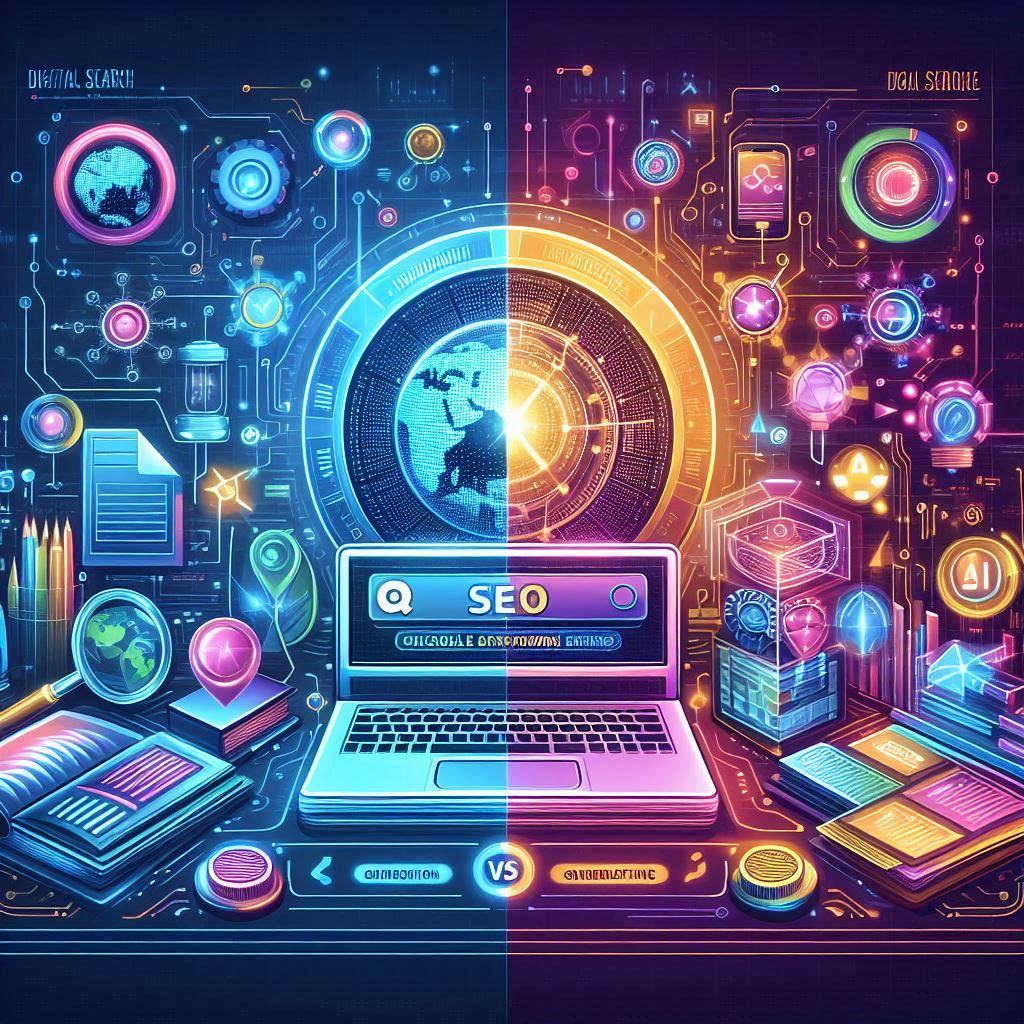
While SEO and Generative Engine Optimization (GEO) share some basics—like creating quality content and keeping your site technically healthy—they serve different goals. They also use different methods and produce different outcomes. Knowing these differences is essential for creating a strategy that works in today’s AI-driven search landscape.

1.User Intent and Results
Traditional SEO focuses on ranking higher on search engine results pages (SERPs). The main goal is to get clicks—you want your page to appear near the top for a target keyword so users will visit your site. SEO success is usually measured by rankings, traffic, and click-through rates.
GEO, in contrast, aims for visibility within AI-generated answers. Rather than trying to reach the top spot on a SERP, the focus is on having your content included directly in the AI’s response. Often, users won’t see a list of links—they’ll get a synthesized answer created from multiple sources. With GEO, the goal isn’t just clicks; it’s to be referenced, trusted, and quoted by the AI system delivering the answer.

2.Content Structure and Style
SEO content typically consists of long-form articles, keyword-focused headlines, and material designed for both readers and search engine algorithms. While quality and clarity are important, traditional SEO often involves tactical use of keywords, link building, and meta tag optimization.
Generative Engine Optimization focuses on natural language, semantic organization, and clear context. The goal is to make content that AI can easily read, understand, and use to generate answers. This means using conversational language, clean formatting, and natural phrasing—without depending heavily on keywords. GEO-friendly content often takes the form of helpful how-to guides, Q&A sections, explainers, and structured bullet points.

3.Clicks vs. Credibility
SEO aims to drive traffic to your site, while GEO focuses on building trust and recognition. The difference may seem small, but it’s powerful. A top-ranking SEO page might attract 10,000 visits a month, whereas a well-optimized GEO page could be referenced in thousands of AI-generated answers, boosting long-term brand authority—even if users never actually visit your website.
4. Measuring Performance
SEO performance is typically tracked through pageviews, bounce rates, time on page, backlink profiles, and search rankings.
GEO performance is less straightforward but equally impactful. Key indicators include:
-
How often your content appears in generative AI responses
-
How frequently your brand is cited in AI summaries
-
Visibility in zero-click search environments
-
Mentions or citations in platforms like SGE, Bing Chat, or ChatGPT plugins
In the end, SEO and GEO play different roles in your digital strategy, and finding the right balance between them is essential for success.
Is GEO Replacing SEO?
The short answer: not yet—but it’s changing the game.
Generative Engine Optimization is growing quickly, but it hasn’t replaced SEO. Instead, GEO is the next step in SEO’s evolution. Just as mobile-first indexing didn’t eliminate SEO but changed how we optimize for it, GEO is redefining how content is found, read, and used by AI-powered systems.

1. SEO Isn’t Dead—It’s Evolving
Even with the growth of generative search, millions of people still rely on traditional search engines. Organic rankings, featured snippets, top-10 lists, and blog posts remain important—especially for transactional searches, product queries, and navigational intent. So if you’re wondering whether to give up on SEO, the answer is no.
The important point is, content that ranks well in traditional search may not perform as effectively in generative search unless it’s optimized for GEO. Generative Engine Optimization encourages marketers to move beyond just keywords and focus on answer targeting. This involves creating authoritative, trustworthy, and semantically rich content that AI can read, cite, and rely on.
2. GEO Is Driving the Zero-Click Era
GEO is becoming increasingly important because of the rise in zero-click searches—queries answered directly within the search interface without any clicks. This trend reduces the impact of traditional search results and makes it crucial for your content to appear in AI-generated answers.
Generative Engine Optimization focuses on inclusion rather than ranking. The more your content is used by generative engines, the more users associate your brand with authority and expertise—even if they never visit your website.
3. The Future Is a Hybrid Approach
Instead of seeing GEO and SEO as opposites, the future lies in combining both. SEO will remain key for traditional search visibility and transactional goals, while GEO will grow in importance for brand awareness, thought leadership, and zero-click authority.
Forward-thinking brands are already adapting by:
Updating blogs with structured Q&A sections
Adding concise summaries at the top of articles
Using expert-written, AI-friendly language
Applying schema markup to improve AI discoverability
GEO doesn’t replace SEO—it expands digital optimization into a new, AI-driven era.
Revise blog posts with structured Q&A sections
Add clear, concise summaries at the beginning of articles
Use expert-written, AI-friendly language
Implement schema markup to boost AI discoverability

Is SEO Better Than AI Search Optimization?
This is a common—and often misunderstood—question in digital marketing today. To determine if SEO is “better” than AI search optimization, it’s important to realize that they aren’t competing in the same space.
Traditional SEO and AI search optimization, like Generative Engine Optimization (GEO), serve different purposes in how users find and interact with information online.
Traditional SEO is designed for search engines that display a list of clickable results. The main goal is to rank high and attract traffic. You want your page to appear near the top when someone searches on Google or Bing. This approach works particularly well for transactional queries (like “order custom coffee mugs”), navigational searches, and some informational questions (like “how to start a blog”). SEO focuses on optimizing individual pages, building backlinks, refining meta tags, and strategically placing keywords so search engines can understand and rank your content.
So is SEO better? It depends on your goals:
AI optimization, or GEO, takes a different approach. It focuses on making content readable, citable, and usable by AI-driven engines. These tools don’t always link to your site; instead, they generate answers from the content they’ve indexed or been trained on. With Generative Engine Optimization, your aim is to ensure your content is included as part of those AI-generated answers.
If your goal is driving clicks, traditional SEO remains essential.
If your goal is building brand authority, trust, and appearing in AI-generated answers, GEO is becoming increasingly important.
The true advantage comes from combining both approaches. A hybrid strategy ensures your brand is visible in both conventional search results and AI-driven generative responses.
GEO vs. SEO: Understanding the Key Differences
While both Search Engine Optimization (SEO) and Generative Engine Optimization (GEO) aim to increase visibility, they serve different purposes. Understanding the differences between GEO and SEO is crucial for brands looking to stay competitive.
SEO is designed for traditional search engines. Its primary goal is to drive clicks by optimizing pages to rank higher on search engine results pages (SERPs). Users enter a query, scan a list of links, and decide which page to visit. SEO depends heavily on keyword placement, backlinks, and structured metadata to help search engines understand and rank your content.

Key Differences of GEO vs SEO:
GEO, on the other hand, is designed for AI-powered platforms like ChatGPT, Google SGE, Bing Copilot, and other generative engines. These systems don’t display traditional lists of links—they provide direct answers by combining information from multiple sources.
This is why GEO requires a different approach compared to SEO. If your content isn’t clear, concise, and semantically structured, it won’t be included in AI-generated summaries—even if it ranks highly on Google.
Purpose: SEO focuses on generating clicks, while GEO aims to establish authority within AI-generated responses.
Structure: SEO content relies on keywords and formatting for ranking, whereas GEO content emphasizes clear answers, natural language, and AI-friendly readability.
Discovery: SEO visibility comes from search engines and clickable links, while GEO is discovered through AI chat interfaces, summaries, and voice assistants.
In today’s AI-driven world, understanding the differences between GEO and SEO is essential. Brands that successfully balance both strategies will stand out on traditional search engines and generative AI platforms alike. As the digital landscape evolves, mastering GEO vs SEO will determine which brands get attention—and which get overlooked.

How Can You Optimize Content for Generative AI
To thrive with Generative Engine Optimization, your content must do more than inform—it needs to be structured so AI can easily read, understand, and use it. This requires shifting from traditional SEO tactics to strategies designed specifically for AI-driven search and generative models.
Unlike conventional SEO, AI optimization focuses on how content performs in conversational engines that generate answers instead of displaying lists. Success isn’t just about keywords—it’s about clarity, organization, and context.
Prioritize Clear and Contextual Responses
Generative engines value clarity. The more straightforward and complete your content, the higher the chance it will appear in AI-generated answers. Aim to answer questions directly, ideally within the first few sentences of a section or paragraph.
Use the inverted pyramid style: present the answer first, then follow with context, background, and supporting details.

Bad GEO content:
“Coffee is one of the most widely consumed beverages in the world.”
Better GEO content:
“The ideal temperature for brewing coffee is between 195°F and 205°F. This range extracts the best flavors without over-extracting bitter compounds, ensuring a balanced and aromatic cup.”

Write for Humans and AI, Not Just Keywords
While traditional SEO emphasizes exact-match keywords, generative engines prioritize semantic meaning. To optimize for AI search, use synonyms, related terms, and natural, conversational phrasing that mirrors how people actually ask questions.
Include Structured Elements: Lists, Tables, and FAQs
Generative engines favor well-structured content. Using lists, tables, and FAQ sections makes it easier for AI to extract, interpret, and present information accurately—an important part of AI search optimization.
This kind of structured format is highly GEO-friendly and significantly boosts your chances of being featured in AI-generated answers.


Keep Content Fresh and Evergreen
Generative engines value content that is relevant and up-to-date. Old or static content is less likely to appear in AI-generated answers. As part of your AI search optimization strategy, regularly review older posts, add the latest insights, and improve clarity to stay competitive in AI-driven search environments.
In short, optimizing for generative engines goes beyond traditional SEO. It’s about preparing your brand for the future of AI search, where useful, clear, and well-structured content is more likely to be selected and trusted by AI systems.
Scarlet team is at your service, connect with us via [email protected] for international/local projects.