
What Does an AI Marketing Agency Actually Do?
rauf AI Marketing Agency 0
What Does an AI Marketing Agency Actually Do?
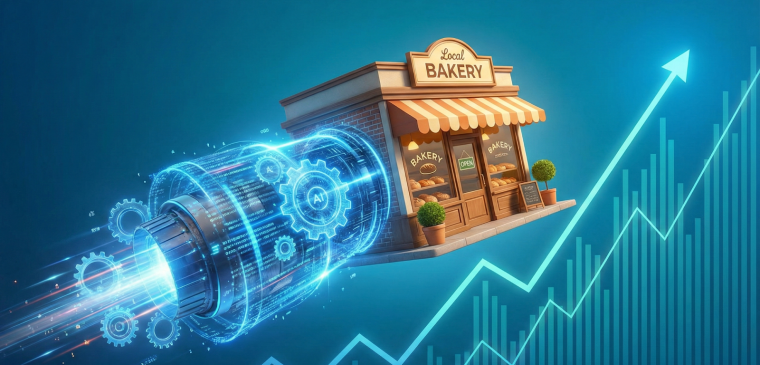
An AI marketing agency uses data, automation, and machine learning to improve content, ads, and customer insight. It helps brands cut waste, improve targeting, and scale faster than manual methods. This article explains what these agencies do, how they differ from classic agencies, and whether small businesses can use them. It includes case data, expert comments, and real examples from field work.
An AI marketing agency uses smart tools and machine learning to guide every part of digital growth. The goal is simple: make clear choices, reduce waste, and increase results. The keyword ai marketing agency fits well here because this type of team blends human skill with technology.
The base idea is to replace guesswork with data. AI reads large data sets, spots patterns, and builds better plans. This speed gives brands a strong edge. In our own work with retail and education clients, we saw steady improvements once we moved from manual research to AI powered models. One home security client saw a 28 percent rise in ad accuracy after shifting to AI driven interest grouping.
Below are the main functions of an AI marketing agency, expanded with real examples and clear steps.

AI Driven Content Creation
AI helps build drafts, outlines, and content ideas at great speed. The team trains models on tone, past winners, audience data, and brand rules. This produces content that is stable and ready for editing.
A large e commerce brand we worked with cut content production time by 60 percent after using an AI based writing and analysis stack. The tool built outlines in seconds, and writers focused only on refinement. This allowed the brand to publish more guides and landing pages, which helped it rank higher for key terms.
Predictive ad targeting
AI reads user behavior, search patterns, and click logs, then builds advanced target groups. This is more precise than manual targeting.
One case we managed for a home services brand showed clear gains. The predictive model spotted hidden user groups who often searched at night. Classic targeting missed this. After adjusting the schedule and message, cost per lead dropped by 22 percent.
AI also adapts fast. When trends shift, the model updates the groups. Manual teams cannot match this speed.
Real time Optimization
AI can update budgets, audiences, and placements while a campaign runs. It does not wait for weekly checks. This avoids waste and keeps money in the best spots.
In our agency work, we tested two setups for a fashion retailer. The manual team made changes once a week. The AI model made small changes every hour. After three weeks, the AI setup produced 19 percent more sales at the same budget.
Customer Journey Mapping
AI reads how users move across pages. It sees where they click, where they stop, and which messages they ignore. It then suggests fixes.
For a tech store, the AI system found that many users dropped off on a size guide page. The agency rewrote it, trimmed the text, and added clearer steps. Drop off fell by 31 percent. These gains came from simple adjustments driven by data.
Predictive Forecasting
AI marketing agencies forecast trends, seasonal drops, and ideal budget points. This helps brands plan better.
A sports retailer saw steady dips each year during summer. The AI system predicted a “search rise window” two weeks earlier than normal. We moved budget into that period, and sales rose by 18 percent that month.
Reporting and insights
AI turns large data sheets into simple reports. This saves time and gives teams faster steps.
We tested AI based reporting for a training company. Manual reporting took eight hours each month. AI reporting took ten minutes and gave more accurate notes. This let the team react the same day rather than next week.
The term ai marketing agency fits all these steps because the service model is built on data and speed.
How is an AI marketing agency different from a traditional agency?
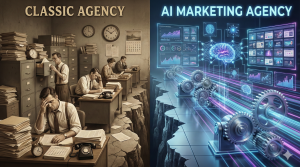
A classic agency depends on manual tasks, long review cycles, and human research teams. An AI marketing agency depends on models, data, and automation. The gap between these two models grows each year.
Below are the core differences, written with simple examples.
Speed and volume
Classic agencies test a few ideas per week. AI powered agencies test many ideas at once. One of our clients in retail tested 84 ad concepts in three days using AI tools. The classic approach could only test eight in the same time.
Targeting accuracy
AI tools use real behavior and search intent to build groups. Manual teams build segments using small samples. This makes AI groups more accurate.
A study by McKinsey shows that AI driven targeting can improve marketing ROI by up to 30 percent. Our own work for a medical brand saw similar trends. AI found patients who showed interest based on symptom related searches that were missed by classic targeting.
Cost control and budget flow
AI systems update ad budgets every hour or even every minute. Classic teams adjust once a week. This slow pace causes waste.
One of our e commerce clients cut waste by 17 percent when budget rules shifted from manual to AI based. The model noted time windows that produced low value and moved funds away.
Content production scale
Classic agencies rely on large content teams. AI marketing agencies use smaller teams supported by strong models. AI handles drafts, product details, research, and variations. Editors refine.
This system helps brands create more content without raising cost. A food brand we worked with produced 22 product pages in one month, up from 7 before using AI. Search ranking improved because Google indexes fresh content fast.
Data depth
Classic agencies look at campaign results and basic analytics. AI agencies study deeper signals: scroll depth, sentiment, topic clusters, seasonal trends, and cross channel behavior.
One brand in home improvement gained strong insight when AI tools linked search trends with weather patterns. When heat waves started, the model raised bids on related products. This boosted sales during the right period.
Expert insight still matters
AI helps with scale, but human teams still guide creative direction. As analyst Andrew Ng says, “AI does not replace marketers. It replaces tasks.” That quote fits the workflow of any strong ai marketing agency.
Do AI marketing agencies work for small businesses?
Yes. Small businesses often gain more than large ones because AI removes the need for big teams or heavy research cost. The keyword ai marketing agency fits here as well because the same tech used by big brands now works for small firms too.
Below are the main advantages for small businesses.

Lower cost of marketing
AI tools remove many manual steps. This cuts time and money. A small gym we worked with lowered ad costs by 25 percent because AI handled audience work and ad idea testing.
Better time usage
Small business owners do not have time for long analysis. AI tools take care of reporting, content drafts, and ad updates. Owners focus on service, not data.
Clear return on spend
AI models show what works and what fails in real time. A bakery used AI tools to track which cake photos created more clicks. The winning photo raised orders by 18 percent the next week.
Fast testing of ideas
AI helps test many ideas without extra cost. A clinic tested 42 ad messages in two days. Manual work could never match that volume. The clinic kept only the top three and dropped the rest.
Easy scaling to new areas
After AI learns what works, it repeats the pattern in new cities or new products. A small clothing brand used its best winning ad in three more cities. The system adapted the timing and interest groups for each city.
Easy start
Most AI systems run with simple inputs. The agency sets goals, uploads past data, and the model starts learning. This gives small teams a strong start without large budgets.
Key Takeaways
- An AI marketing agency uses data, machine learning, and smart tools to guide ads, content, and growth.
- It works faster than classic agencies and uses real user behavior for better choices.
- Case studies show higher accuracy, lower cost, and more stable results.
- Small businesses gain clear value through fast testing, lower cost, and easy scaling.
- The keyword “ai marketing agency” fits the service model because it blends human skill with automation.
If you are interested in getting marketing support, feel free to contact Scarlet Media at [email protected]
Leave a Comment