

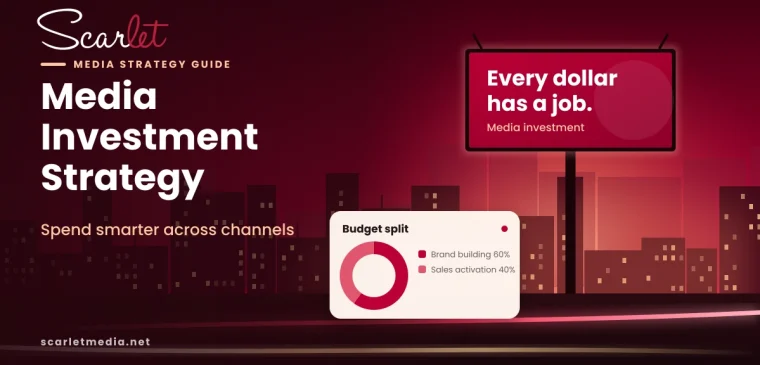
Media Investment Strategy: How to Spend Smarter Across Every Channel
Rauf Kenan Media Strategy 0
A media investment strategy is the plan behind every dollar you put into advertising. It decides how much goes to TV, outdoor, digital and the rest, and what each part should achieve. Without one, budgets drift toward whatever felt urgent last month. With one, every channel has a job, and you can see which jobs pay off. This guide walks through how to build a media investment strategy that holds up.
What a Media Investment Strategy Is
Most brands have a media plan. Fewer have a media investment strategy. The plan says what runs and when. The strategy says why the money is split the way it is.
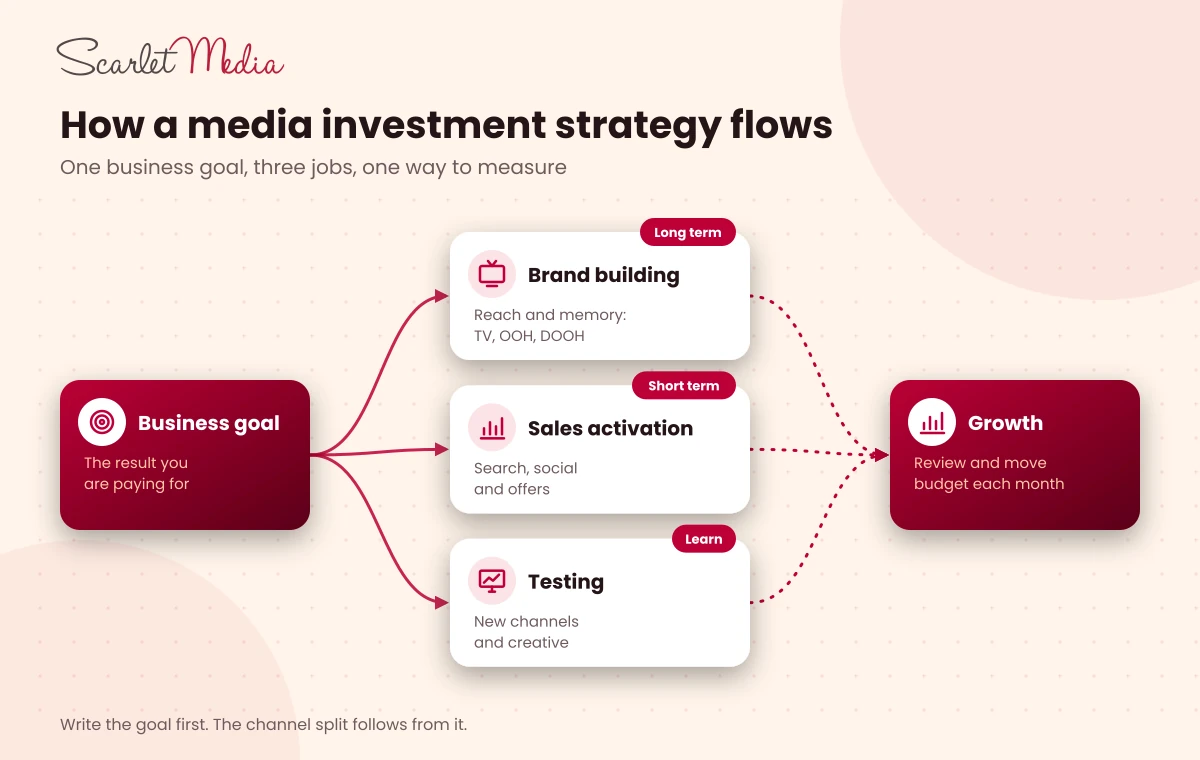
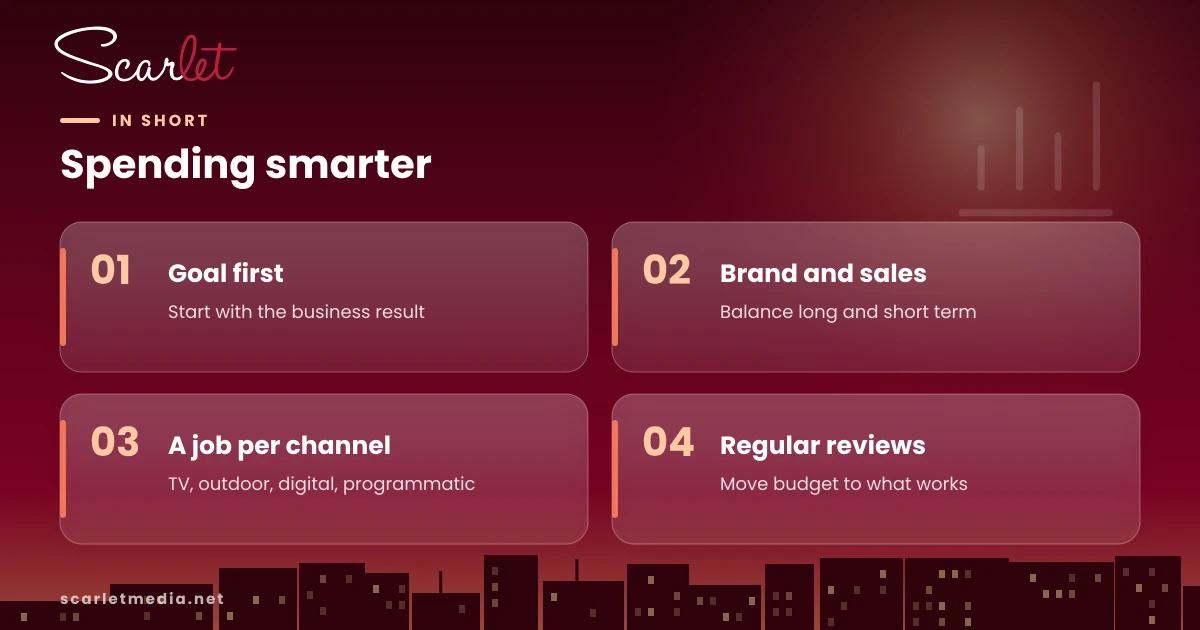
A clear media investment strategy answers four questions:
- What business result are we paying for?
- How much should go to long-term brand growth versus short-term sales?
- Which channels are best at each of those jobs?
- How will we know if the split is working?
Answer these first, and the media plan becomes much easier to write. It also gives your team a shared reason for every choice. When someone asks why outdoor got more money this quarter, the media investment strategy already holds the answer.
Start With the Business Goal, Not the Channel
It is tempting to start with channels. A team loves social, or a rival just ran a big TV campaign. But channels are tools. The goal comes first.
A brand launching in a new city needs fast awareness. A brand with strong awareness but weak sales needs to turn interest into action. A brand facing new rivals needs to stay top of mind. Each goal points to a different mix, even with the same budget. Write the goal as one plain sentence, such as “double store visits in Ankara by June.” A clear goal makes every later choice easier to test.
Balance Brand Building and Short-Term Sales
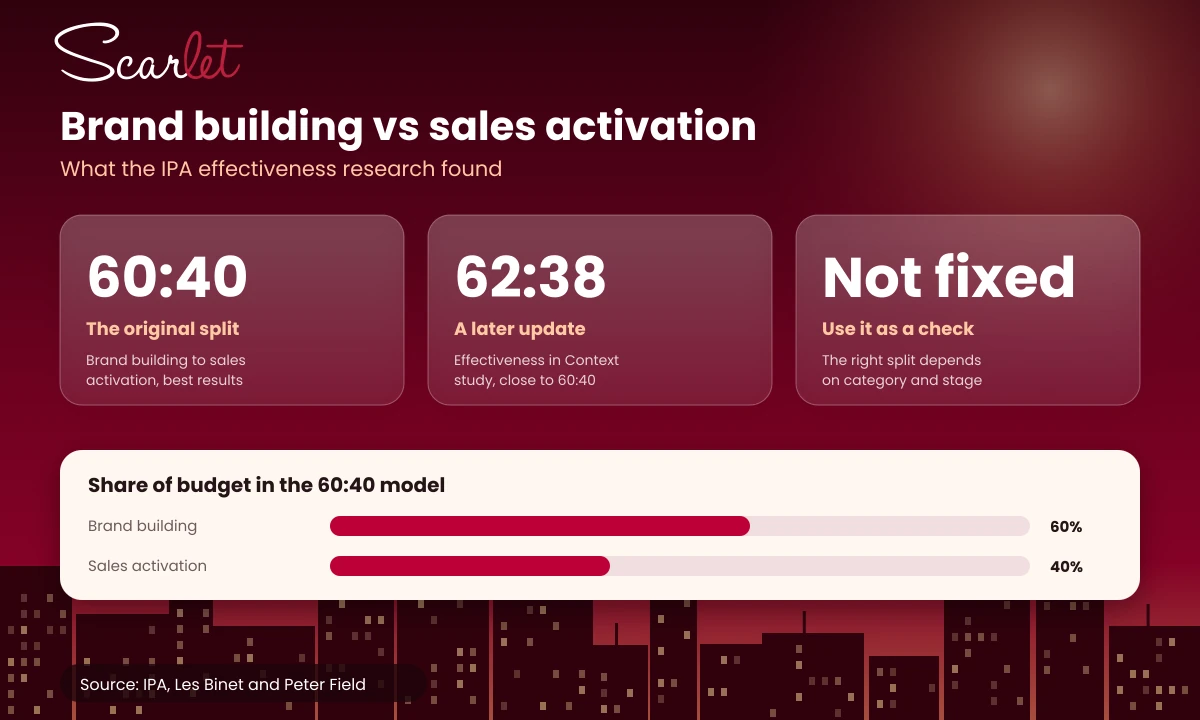
One of the best-known findings in advertising comes from research by Les Binet and Peter Field for the IPA. Their work found that the best results came when budgets were split around 60:40 between brand building and sales activation. A later study put the sweet spot at 62:38.
This is not a fixed rule. The right split depends on your category, your stage and your rivals. But it is a useful check. If 90% of your budget goes to ads that chase a click today, your brand may be getting weaker each year without you noticing.
Match Each Channel to a Job
Once the split is clear, each channel gets a role. Here is a simple starting point:
- TV: wide reach and emotion, best for brand building.
- Outdoor and DOOH: daily presence in the places your audience moves through.
- Airport and transit media: high-value audiences with time to look.
- Search and social: catching demand and driving action.
- Programmatic: reaching set audiences across many sites at scale.
No channel is good at everything. A media investment strategy works best when channels support each other instead of fighting for the same job.
Build a Media Campaign Strategy Around Timing
Money is not only split by channel. It is also split by time. A strong media campaign strategy plans when each channel starts, peaks and fades.
For a launch, TV and outdoor often lead in the first weeks to build reach. Digital then picks up the people who are now searching. For a seasonal brand, spend may rise before peak months and drop after. Timing can change results as much as the channel mix itself.
What Good Media Strategy Services Include
If you bring in outside help, look at what is actually included. Strong media strategy services usually cover:
- Research: your audience, rivals and market.
- The investment split: by channel, by goal and by month.
- Scenarios: what happens if the budget goes up or down by 20%.
- Measurement: the numbers that will show if the plan is on track.
- Reviews: set points to check results and shift money.
The last point matters most. A media investment strategy should not be fixed for a year. It should be reviewed and moved as results come in.
Choosing a Media Strategy Agency or a Media Strategy Company
The names vary, but the questions are the same. Say you are comparing a media strategy agency with a media strategy company. Ask each one:
- Do they start with your goals, or with the channels they like to sell?
- Can they plan offline and online media in one view?
- Do they know the local market where you will run?
- How often will they review and adjust the split?
A partner who plans and buys across TV, outdoor and digital can see the full picture. A partner who only handles one channel will usually push that channel.
How Scarlet Media Plans Media Investment
Scarlet Media helps brands and agencies plan and buy media in Turkey, Dubai and other markets. We look at the full mix, from TV and OOH to DOOH and digital, and build a media investment strategy around your goals instead of one channel.
To talk to our team about your next campaign, email us at [email protected].
Leave a Comment