

Radio Advertising Strategy: 6 Ways to Make Every Spot Count
Rauf Kenan Radio Advertising 0
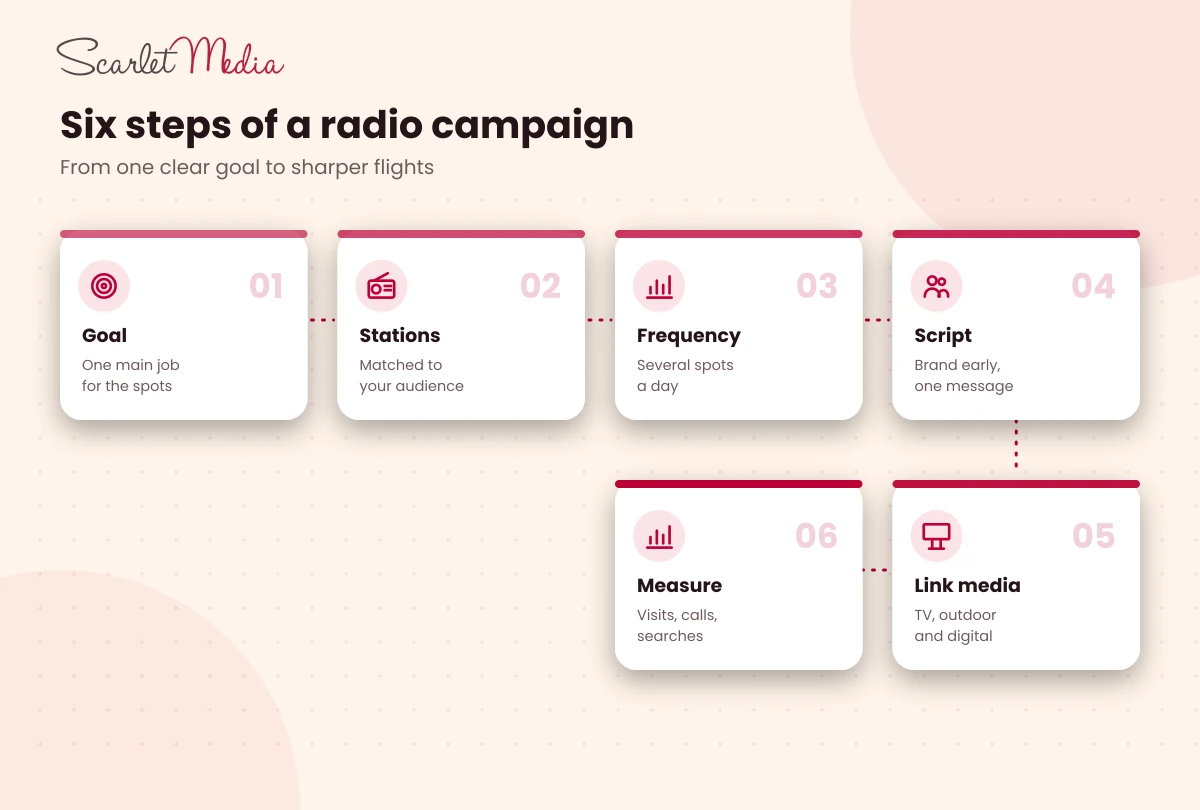
A clear radio advertising strategy turns short spots into real results. Radio reaches people while they drive, work and cook. But a spot only works if it airs at the right time, on the right station, with a message people can catch in seconds. Here are six ways to build a radio advertising strategy that makes every spot count.
Why Radio Still Earns a Place in the Plan
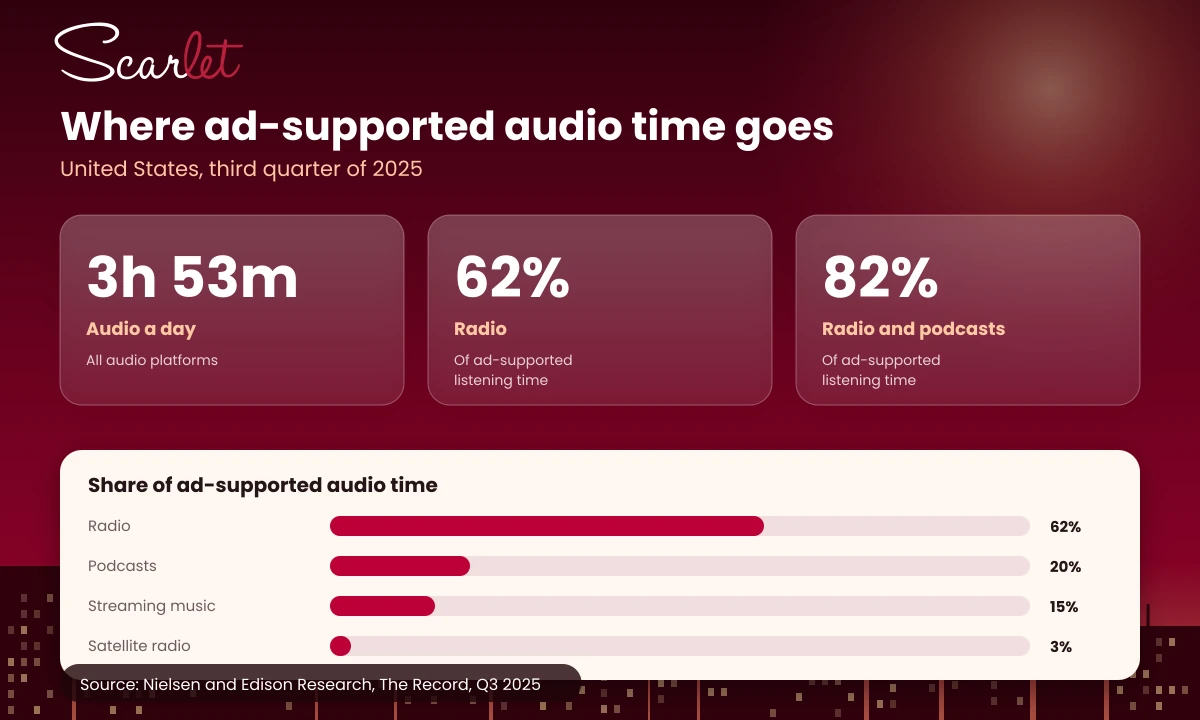
Radio is one of the few media that people use while doing something else. In the United States, Nielsen found that people spent 3 hours and 53 minutes a day with audio in the third quarter of 2025. Inside ad-supported audio, radio took 62% of listening time. Podcasts took 20%, and streaming music took 15%.
Markets differ, but the lesson travels well. Audio is a daily habit, and radio still holds a large share of it.
1. Start With One Clear Goal
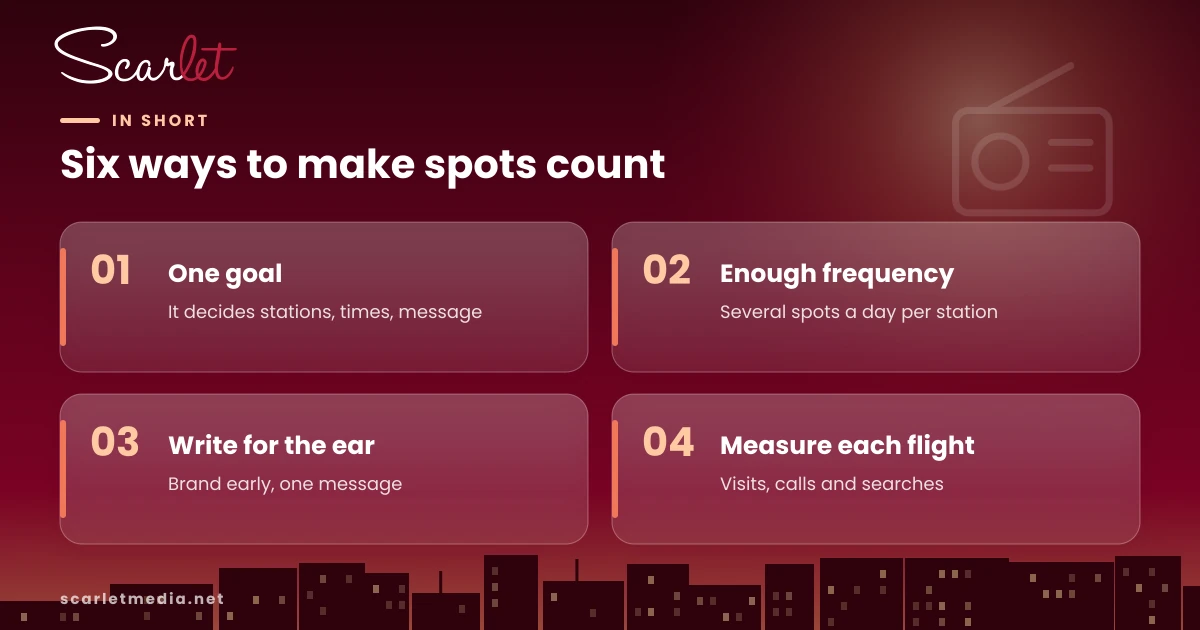
Every radio advertising strategy needs one main goal. It could be awareness for a launch, traffic to stores for a sale or calls to a phone line. The goal decides the stations, the times and the message. A launch needs wide reach. A sale needs heavy weight in the days just before it.
2. Use Radio Media Planning to Pick Stations and Times
Good radio media planning matches stations to your audience. News and talk stations reach different listeners from pop music stations. Each daypart reaches a different listener:
- Morning drive: commuters, with news and traffic updates.
- Midday: people at work, in shops and at home.
- Evening drive: commuters heading home, often in a calmer mood.
- Weekends: errands, family trips and sports.
Ask for listener data by station and daypart. Then pick a small set of stations where your audience listens most, rather than a thin spread across many.
3. Buy Enough Frequency Through Smart Radio Media Buying
Radio works through repetition. One spot a day is easy to miss. Most campaigns need several spots per day on each station to be remembered.
Smart radio media buying puts weight into fewer days instead of spreading it across a whole month. A short, strong flight often works better than a long, weak one. Concentrated weight is easier to remember than a thin, steady trickle.
4. Write for the Ear
A radio ad has no pictures, so the script has to do all the work. Five habits help:
- Say the brand name early, and say it more than once.
- Keep one message. Listeners cannot replay a spot they half heard.
- Use simple words and a clear call to action.
- Make the next step easy, such as a short web address or a simple phone number.
- Use sound, such as voices, music and effects, to set a scene.
Test the script out loud. If it is hard to say, it will be hard to remember.
5. Link Radio to Other Media
Radio is strongest as part of a wider plan. It can repeat a TV message for less money. It can remind drivers of a brand they just passed on a billboard. It can push listeners to search or visit a website. Many brands also use radio to fill gaps between TV flights, so the message stays alive at a lower cost. Linking radio with outdoor and digital builds a radio advertising strategy that does more than any channel alone.
6. Measure What Each Spot Does
Measurement keeps the plan honest. Track web visits, searches, calls or store traffic during and after each flight. Compare stations and dayparts. Use a unique offer code or a short web address for each station when you can.
After the first flight, move spots toward the stations and times that worked best. Over a few flights, the plan gets sharper and less money goes to spots that do not work.
Common Radio Mistakes to Avoid
A few mistakes waste more radio money than any others. The first is too many stations with too few spots on each. The second is a script packed with details, such as three offers, two addresses and a long legal line. The third is no tracking at all, so nobody knows which spots worked. Fix these three, and most campaigns improve fast.
Choosing a Radio Advertising Agency
A good radio advertising agency helps with all six steps. It brings station data, negotiates rates and checks that spots aired as booked. Ask for spot reports with the date, time and station of each airing.
What Radio Advertising Services Include
Typical radio advertising services cover planning, buying, script support, production and reporting. Some agencies also handle sponsorships of shows, traffic reports or weather updates. These short sponsor messages can build a strong link between your brand and a daily routine.
How Scarlet Media Builds a Radio Advertising Strategy
Scarlet Media plans integrated media for brands in Turkey and Dubai. We help you decide where radio fits next to TV, outdoor and digital. We set a clear goal for each channel and measure what each one adds to the campaign.
To talk to our team about your next campaign, email us at [email protected].
Leave a Comment