

Metro Advertising: Why Daily Riders Are a Prime Audience
Rauf Kenan Metro & Transport 0
Metro advertising reaches people at the same time, in the same place, almost every day. Commuters take the same train, walk through the same station and wait on the same platform. For brands, that routine is a gift. It turns a metro line into a reliable way to build frequency with a city audience.
The Scale of Metro Audiences
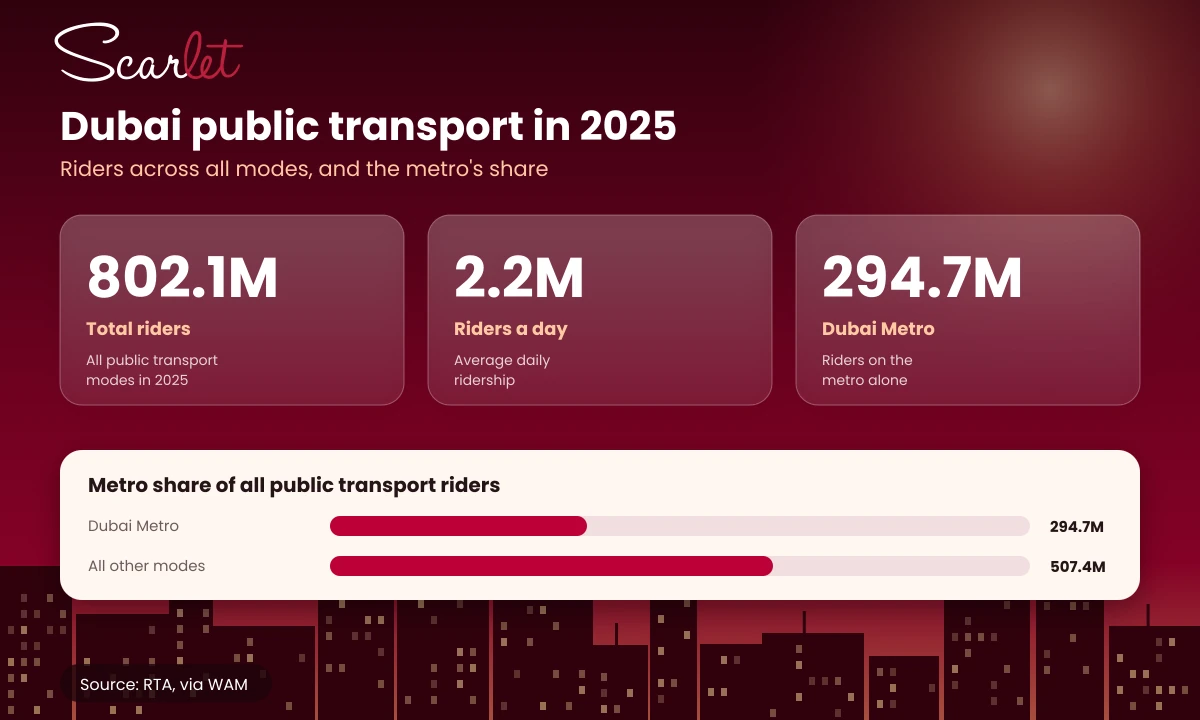
Metro networks carry huge numbers of people. In Dubai, the Roads and Transport Authority reported 802.1 million public transport riders in 2025, about 2.2 million a day. Dubai Metro alone carried 294.7 million of them. In Istanbul, rail lines carry about 4 million journeys a day.
These riders are hard to skip. Unlike many online ads, a metro panel cannot be blocked or scrolled past.
Why Metro Advertising Works
Three things make metro advertising strong:
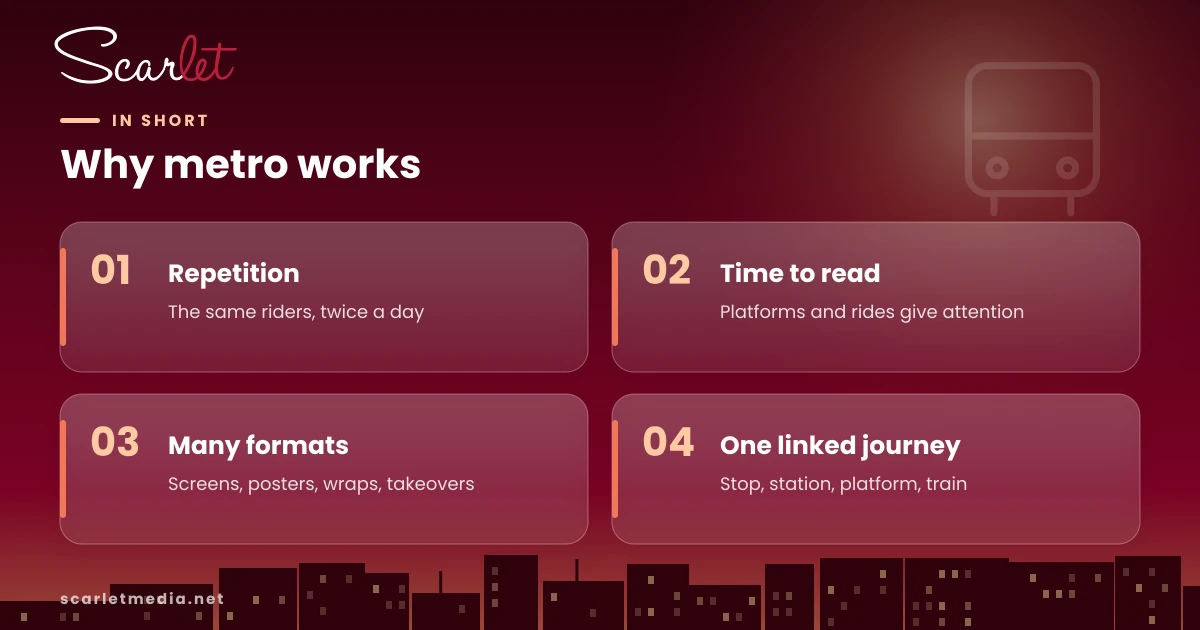
- Repetition: riders pass the same sites twice a day, many days a week.
- Time: waiting on platforms and riding between stops gives time to read.
- Focus: a station has fewer distractions than a busy street.
Metro riders also cover a wide mix of people, from students to office workers and tourists.
Metro Advertising Formats
The main metro formats are:
- Platform screens and digital networks across many stations.
- Platform posters and lightboxes facing waiting riders.
- Train interiors, with panels seen for the whole ride.
- Train wraps, where the outside of a train carries your brand.
- Station dominations, where one brand takes over a whole station.
Station dominations work well for launches. Screen networks build reach across a city at a lower cost.
Planning Lines and Stations
Good metro advertising plans start with your audience. Which lines connect the places they live, work and shop? Which stations do they use most? Central interchange stations reach the most people. Stations near offices, universities or malls reach clear groups.
Ask for ridership by station and by hour before you choose. Time of day matters too. Digital screens let you change the message between the morning rush and the evening ride home.
Creative for Metro Riders
Metro creative can say more than a roadside board, because riders have time. A platform poster can carry a short story, an offer and a clear next step. A panel inside the train can carry even more, since people look at it for several stops.
Still, keep one main idea. Use large text, a clear brand name and a simple call to action. A QR code or short web address works well on platforms, where people can stop and scan.
A Simple Metro Example
Imagine a food delivery app launching in Istanbul. Its users are young office workers who commute by rail. The plan places screens at three busy interchange stations for reach. It adds posters on platforms near office districts, where riders wait each morning. In the evening, the screen message changes to a dinner offer with a QR code. The app then compares downloads in districts along those lines with districts outside them.
Dubai and Istanbul: Two Metro Cities
Dubai Metro runs above ground for much of its route, with stations linked to malls, offices and the airport. Many riders are expats from many countries, so English and Arabic both matter in creative.
Istanbul’s rail network mixes metro, tram, funicular and the Marmaray line under the Bosphorus. It links the European and Asian sides of the city and carries a very wide mix of people. Turkish is the main language on station media.
Public Transport Advertising Beyond the Metro
Metro works best as part of wider public transport advertising. Trams, ferries and bus shelters reach people the metro does not. Together they cover more of the city and more of the daily trip.
Bus Advertising: Moving Reach Above Ground
Bus advertising adds reach on the streets. Bus wraps and side panels travel across the city and are seen by drivers, walkers and riders. Combined with metro advertising, buses help your brand stay visible above and below ground.
Transit Media Advertising: Linking Every Step
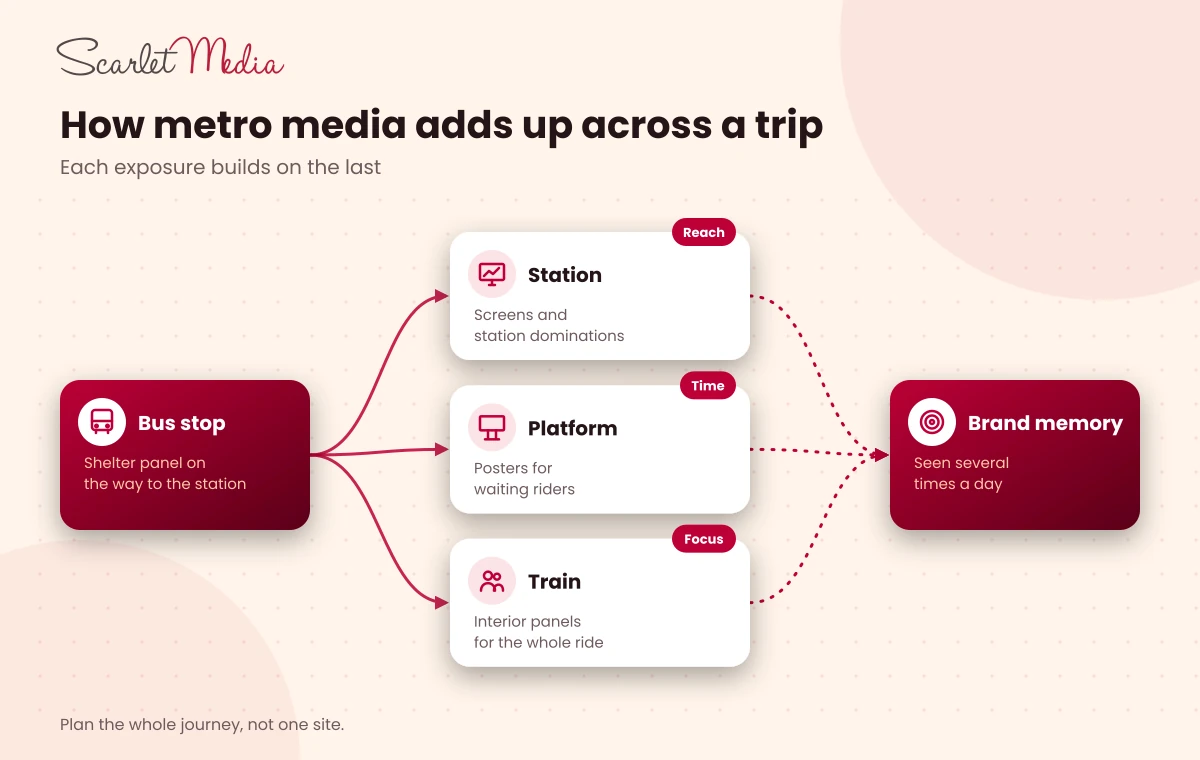
Transit media advertising links the whole journey: the bus stop, the station, the platform and the train. A rider can see your ad at the shelter, again on the platform and again inside the carriage. Each exposure builds on the last.
Measuring a Metro Campaign
Measure what the metro adds. Ridership by station shows the size of the audience you bought. Digital screens provide play logs. Track brand searches, website visits and store traffic near the stations you used. Compare results before and during the campaign, and keep notes on which stations performed best.
Choosing a Metro Advertising Agency
A metro advertising agency knows the lines, the stations and the media owners. It should show you ridership by station, suggest the best formats and share proof after launch. Ask for play logs for digital screens and photos for static sites.
How Scarlet Media Plans Metro Advertising
Scarlet Media plans and buys outdoor media in Turkey, including metro sites in Istanbul, and plans campaigns in Dubai. We pick lines and stations by audience, mix metro with bus and digital media and report on every placement. We also link metro campaigns with mobile ads so riders can act on what they see.
To talk to our team about your next campaign, email us at [email protected].
Leave a Comment