

Advertising Campaign Planning: A Clear 8-Step Checklist
Rauf Kenan Campaign Planning 0
Good advertising campaign planning saves money before a single ad runs. Most campaign problems, such as weak reach, wasted spend or results nobody can measure, start with a rushed plan. This checklist covers eight steps, from the first goal to the final review.
Why a Checklist Helps
Campaigns involve many people: the brand, creative teams, media planners and buyers. A shared checklist keeps everyone on the same plan. It also makes it easy to spot a missing step before launch, when it is still cheap to fix. It is a simple way to brief new team members or partner agencies too. Keep the checklist in one shared file that everyone can see.
Step 1: Set One Clear Goal
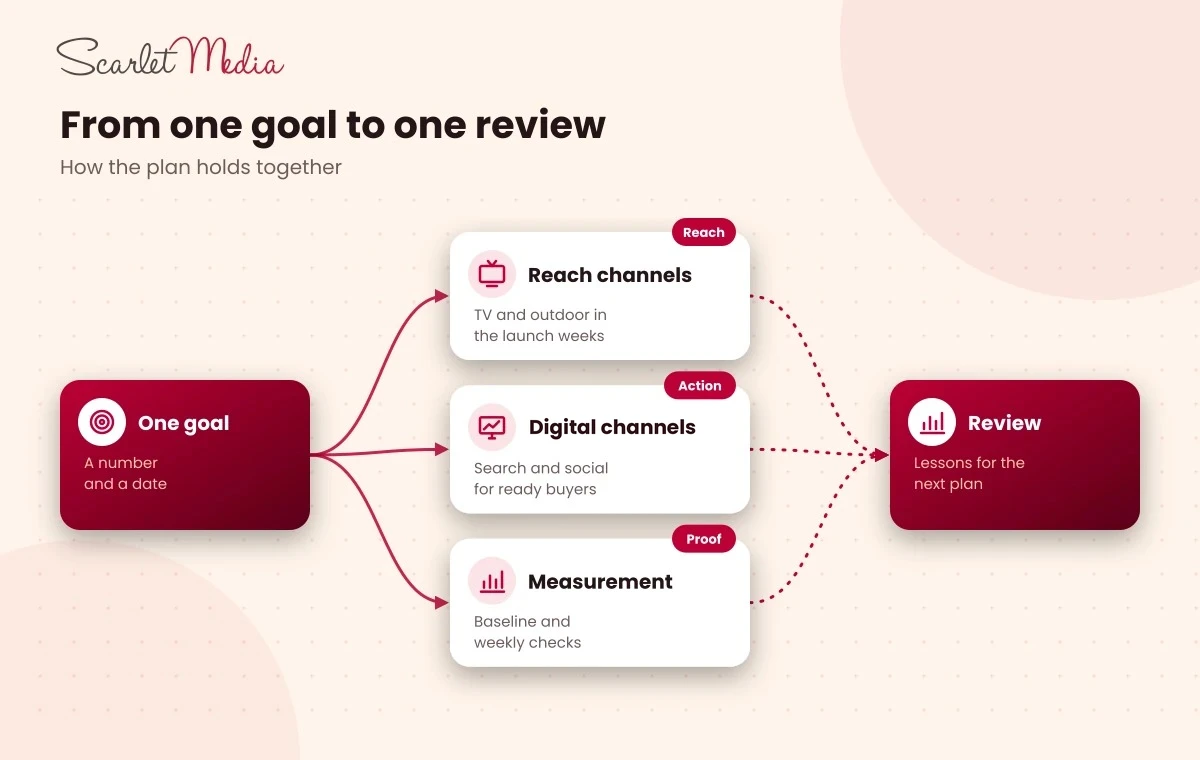
Pick one main goal, such as awareness for a launch, leads for a service or sales for a season. Add a number and a date, such as 2,000 leads in eight weeks. Every later choice should serve this goal. If there are two goals, decide which one wins when they conflict.
Step 2: Define the Audience
Describe who you need to reach: age, location, habits and needs. Be clear about what they know about the brand today. A launch audience needs a different message from loyal customers. Use research, sales data and ratings to describe the audience with facts, not guesses.
Step 3: Set the Budget
Decide the total budget and what it includes: media, production, research and fees. Keep a small share for tests. A clear budget keeps the plan realistic from the start. If the budget is small, focus on fewer channels and a shorter, stronger campaign.
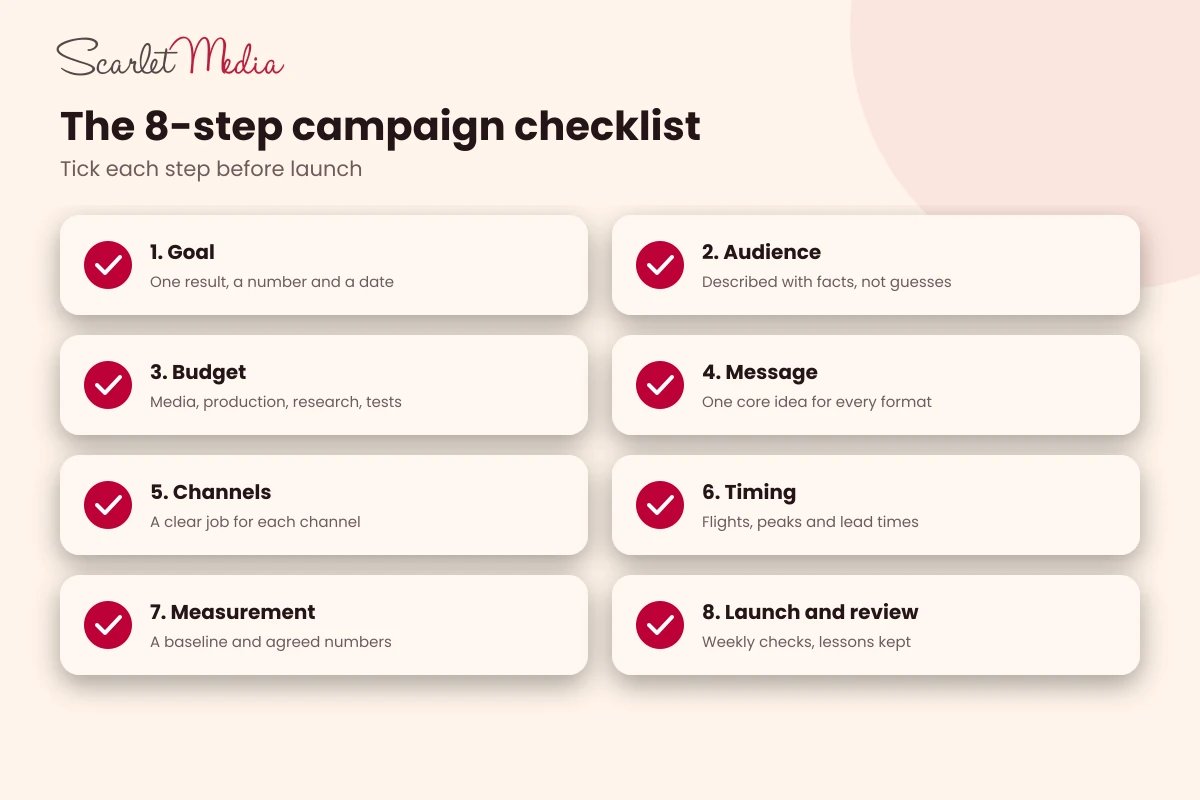
Step 4: Shape the Message and Media Campaign Strategy
Write one core message that fits the audience and the goal. Then set the media campaign strategy: which roles media must play, such as building reach, driving action or both. Brief creative teams on the formats they will need, such as TV spots, outdoor posters and digital videos. Check that the message can be read in three seconds on a billboard and heard clearly on radio.
Step 5: Choose Channels Through Campaign Media Planning
Campaign media planning picks the channels that reach your audience best. Use ratings, outdoor audience data and digital reach data. Give each channel a clear job, and fund each one enough to work. For example, TV can build reach in the launch weeks. Outdoor can keep the brand visible on key routes, and search can catch people who are ready to act.
Step 6: Media Campaign Planning for Timing and Flights
Media campaign planning also decides when ads run. Set start and end dates, heavy and quiet weeks and any peak periods. Book early for busy seasons, since good TV slots and outdoor sites sell out first. Line up the dates with product stock, store openings and sales promotions. Avoid weeks when your audience is busy elsewhere, unless the campaign is built for that moment.
Step 7: Plan the Measurement
Decide how you will judge success before launch. Record a baseline for sales, leads and searches. Agree the numbers each channel will report. Choose one main number for the goal and a few support numbers, such as reach and cost per lead. This matters, because measurement is still a weak spot for many brands. Decide also when you will judge results, since some media keep working after the campaign ends. Nielsen’s 2025 report found that only 32% of marketers measure their spend holistically across channels.
Step 8: Launch and Review With Your Campaign Management Agency
Check every file, booking and tracking link before launch. During the campaign, review results each week and fix problems early. A good campaign management agency moves budget toward what works and reports in a simple format. At the end, write down what you learned for the next plan. Share those notes with everyone who worked on the campaign.
A Simple Timeline
For a typical national campaign, allow about two weeks for the goal, audience and budget. Allow two to four weeks for creative and the media plan. Booking TV and outdoor can take several more weeks, while digital can be set up in days. Peak seasons need more lead time, so start earlier when your launch falls in a busy period.
Common Planning Mistakes
- Too many goals in one campaign.
- No baseline, so results cannot be judged.
- Late booking at peak prices.
- Thin budgets spread across too many channels.
- No review after the campaign ends.
How Scarlet Media Approaches Advertising Campaign Planning
Scarlet Media plans and buys TV, outdoor and digital media in Turkey and Dubai. We work through each step with our clients, from the goal and audience to booking, measurement and review. You can see examples of our campaigns on our works page.
To talk to our team about your next campaign, email us at [email protected].
Leave a Comment