

TV Advertising Reach: How to Plan Reach and Frequency Without Waste
Rauf Kenan TV Strategy 0
TV advertising reach is the share of your target audience that sees your ad at least once. It sounds simple, but it is where many TV budgets go wrong. Some plans reach too few people too many times. Others spread spots so thin that nobody remembers the ad. This guide explains how to plan reach and frequency so that every spot earns its place.
What TV Advertising Reach Really Means
Two numbers sit at the heart of every TV plan:
- Reach: how many people in your target audience see the ad at least once, shown as a percentage.
- Frequency: how many times, on average, those people see it.
Multiply them and you get gross rating points, or GRPs, the total weight of the campaign. The same GRPs can come from wide reach with low frequency or narrow reach with high frequency. The right balance depends on your goal.
How Big TV Reach Can Get
A single big program can reach millions at once. TİAK figures were shared at an industry event in Turkey. They showed that one popular show on January 1, 2025 reached an average of 18.51% of viewers, or about 10.8 million people. Few channels can deliver that kind of reach in one evening.
But a campaign is not one show. TV advertising reach builds over weeks, across many spots, channels and dayparts.
The Waste Problem
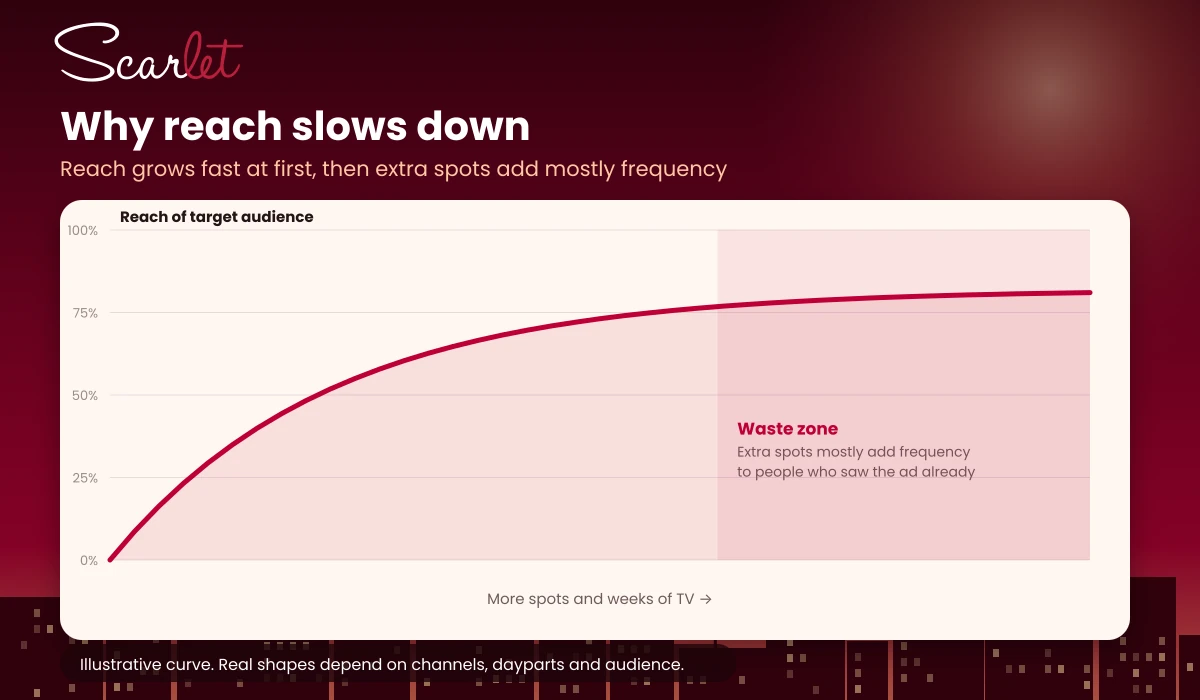
Reach grows fast at first, then slows down. The first spots reach new people. Later spots mostly reach people who have already seen the ad.
That is where waste starts. Past a certain point, extra spots add frequency to the same viewers instead of reaching new ones. Good plans spot this point and move budget to channels, slots or other media that reach fresh audiences.
A Simple Reach Example
Imagine two plans with the same budget and the same total weight. Plan A puts every spot in one channel’s prime time. Plan B spreads the spots across three channels and two dayparts.
Plan A reaches a loyal group again and again, so frequency is high but TV advertising reach stops growing after a few weeks. Plan B reaches more different people, each a few times. For most brands, Plan B builds more memory per lira spent, because more of the audience sees the ad enough to remember it. Checking TV advertising reach week by week shows which pattern your plan is following.
TV Audience Planning: Start With Who, Not Where
TV audience planning comes before channel choice. Define the target group clearly, such as adults 25 to 44 in cities, or women in a certain social group. Then look at what that group watches and when.
A narrow target needs a different plan from a broad one. A brand for young adults may need a mix of entertainment, sports and digital video, since this group often watches less linear TV than older viewers.
How Many Exposures Do You Need?
There is no single magic number, but a few rules of thumb help:
- New brands and launches usually need more frequency to be remembered.
- Well-known brands can often work with lower frequency and wider reach.
- Complex messages need more exposures than simple reminders.
- Strong creative works with fewer exposures than weak creative.
Start with a clear target, test it and adjust after the first weeks.
Building a TV Advertising Strategy Around Reach
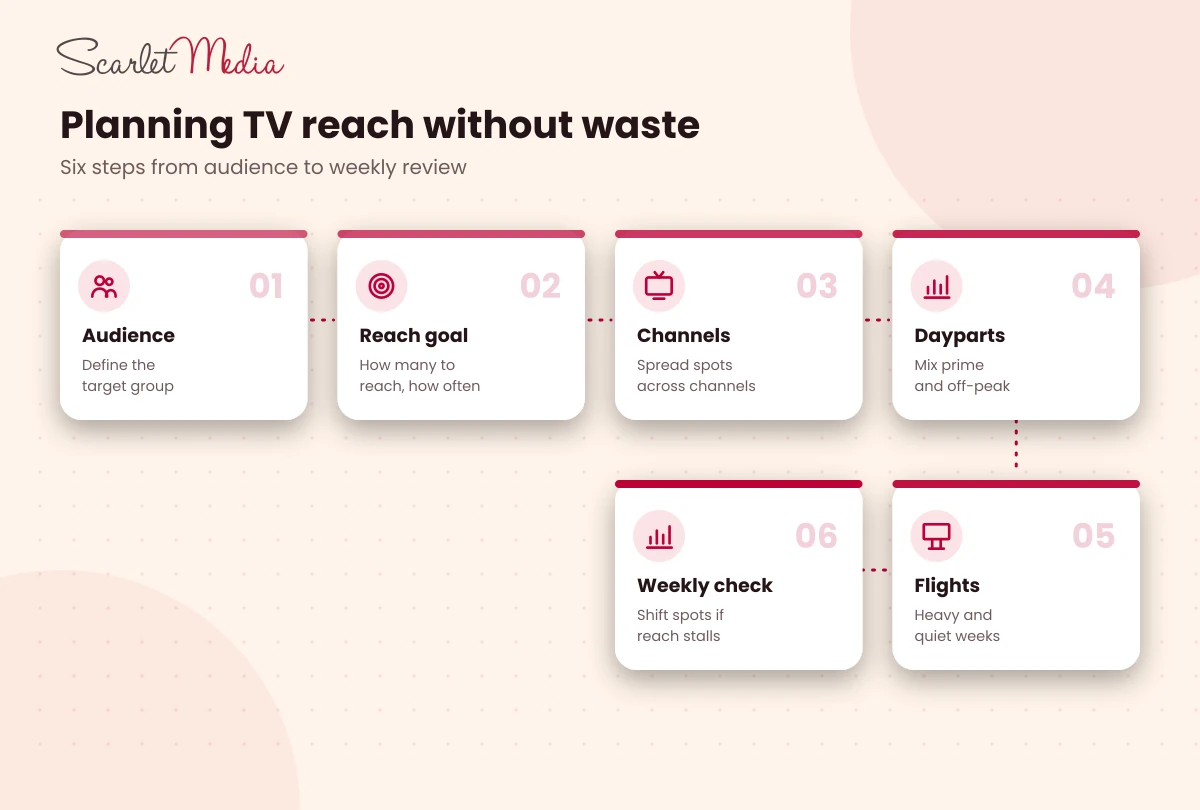
A clear TV advertising strategy sets the reach goal first, then picks the tools:
- Spread spots across channels to reach different viewers.
- Mix dayparts so you are not only in prime time.
- Use flights of heavy weeks and quiet weeks to stretch the budget.
- Add other media, such as outdoor or online video, to reach light TV viewers.
TV Media Strategy: Long and Short Campaigns
Your TV media strategy also depends on time. A short burst before a sale needs fast reach. A long brand campaign needs steady presence over months. Both can reach the same total audience, but the shape of the plan is very different.
TV Campaign Management: Checking Reach as You Go
Good TV campaign management does not stop at booking. After the first weeks, compare planned and delivered reach and frequency. If frequency is climbing but reach has stalled, shift spots to new channels or slots. If reach is behind plan, add weight in the programs your audience watches most.
How Scarlet Media Plans TV Advertising Reach
Scarlet Media plans and buys TV in Turkey for brands and for international agencies that need a local partner. We use ratings data to plan TV advertising reach and frequency and check delivery during the campaign. We also link TV with outdoor and digital to reach viewers TV alone can miss.
To talk to our team about your next campaign, email us at [email protected].
Leave a Comment