

Audience Segmentation: A Simple Guide to Planning Media for Real People
Rauf Kenan Audience Planning 0
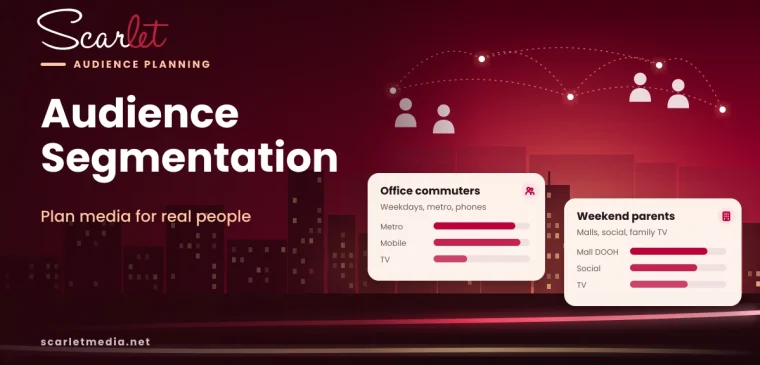
Audience segmentation means splitting your market into groups of people who share needs, habits or traits. Instead of talking to everyone at once, you speak to a few clear groups, each with its own message and media. This guide explains how to segment an audience and turn those segments into a media plan.
Why Audience Segmentation Matters
People expect brands to understand them. McKinsey found that 71% of consumers expect personalized interactions from companies, and 76% get frustrated when that does not happen. Personal messages start with knowing who your groups are.
Segmentation also helps creative teams write messages that feel personal instead of generic. It saves money too. When you know who you need to reach, you stop paying for people who will never buy.
Four Common Ways to Segment
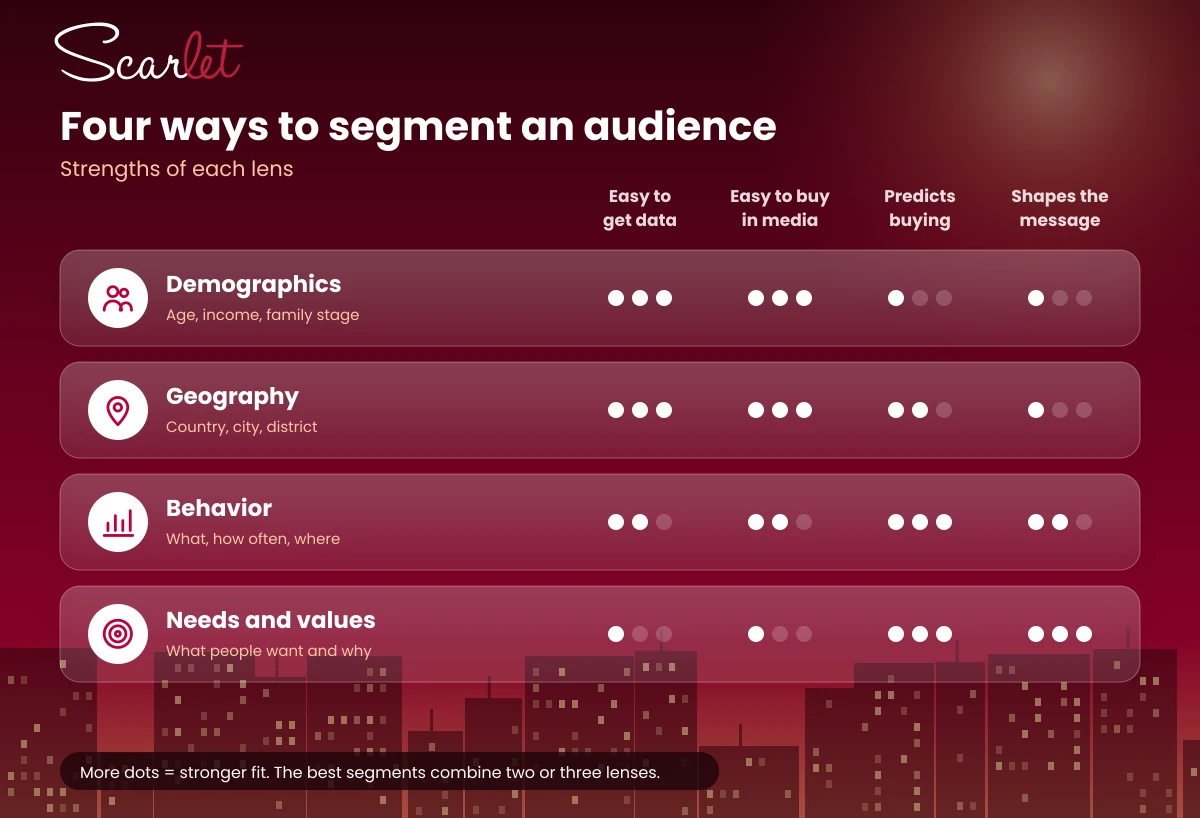
Most audience segmentation uses one or more of these lenses:
- Demographics: age, gender, income, education and family stage.
- Geography: country, city, district or even neighborhood.
- Behavior: what people buy, how often and where.
- Needs and values: what people want from a product and why.
Demographics are easy to get and easy to buy in media. Behavior and needs are harder to measure but often predict buying better. For example, age tells you little about whether someone wants a premium or a budget product. The best segments combine two or three lenses.
Audience Profiling: Bringing Segments to Life
Audience profiling turns a segment into a picture of real people. A profile describes a typical member: age, daily routine, media habits, goals and worries. For example, “young professionals in Dubai who ride the metro and use their phones on the way” is easier to plan for than “adults 25 to 34.”
Good profiles use data, not guesses. Sources include customer records, surveys, web analytics and media research. Update profiles when new data comes in, such as after a campaign or a new survey.
Media Audience Analysis: Where Each Segment Spends Time
Media audience analysis shows which channels each segment uses and when. One group may watch prime time TV. Another may barely watch TV but spend hours on social media. A third may drive long distances and listen to radio.
Use ratings data, digital analytics and outdoor audience data to map each segment. Then build a media mix around where each group spends its time. This is where audience segmentation turns into a plan.
Audience Targeting: Reaching Each Segment
Audience targeting is how you reach each segment once you know it. Digital channels let you target by age, interests, location and behavior. Programmatic buying adds data on context and devices. TV and outdoor target through program choice, dayparts and locations. Outdoor can target by area, such as districts where a segment lives or works.
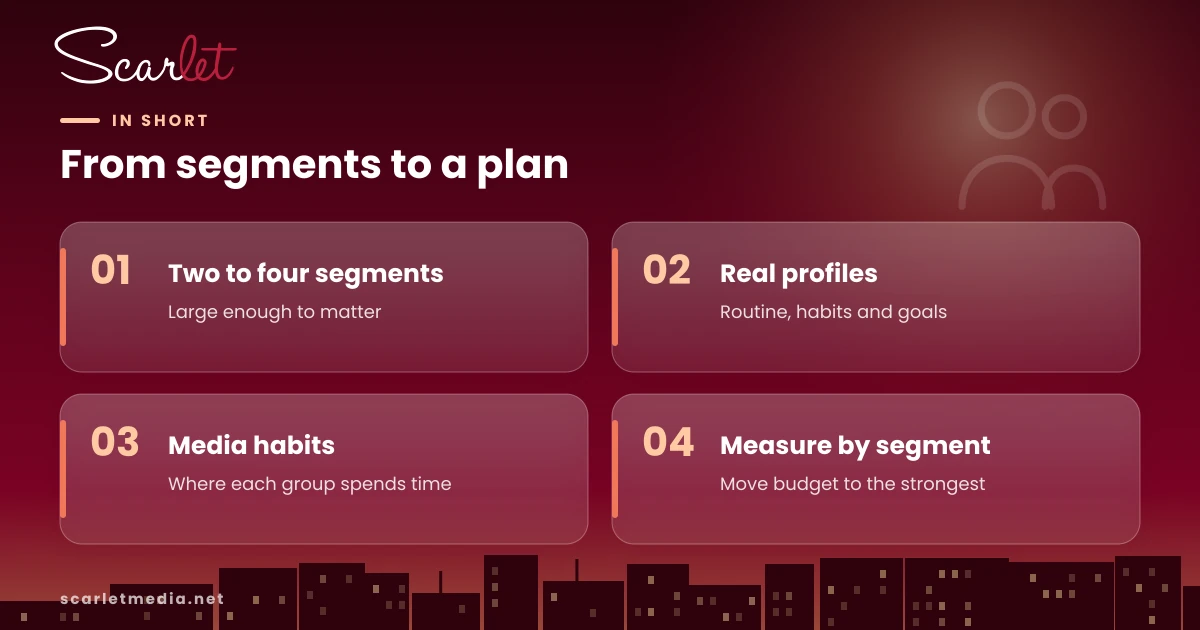
Keep segments large enough to matter. A segment that is too small can be expensive to reach and hard to measure. Clear segments make targeting cheaper and easier to measure.
Turning Segments Into a Media Plan
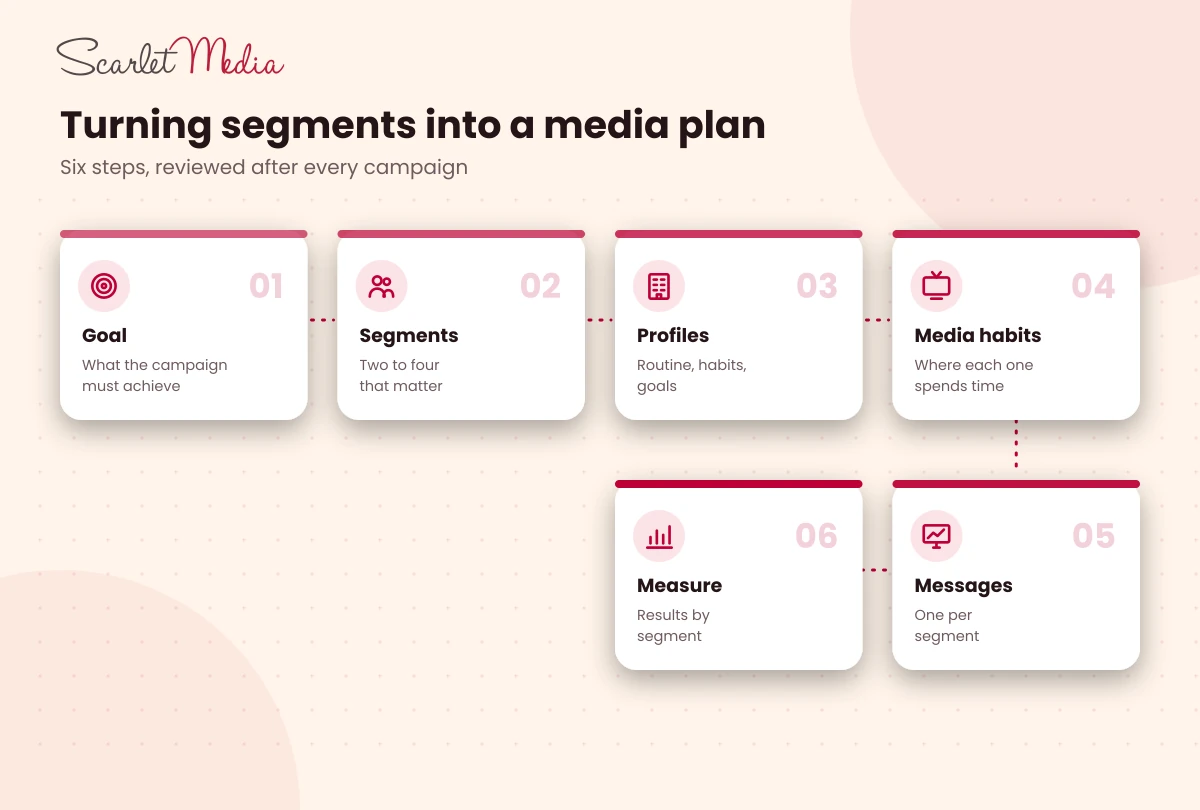
A simple process keeps audience segmentation practical:
- Define the goal for the campaign.
- Pick two to four segments that matter most for that goal.
- Build a profile for each segment.
- Map media habits for each one.
- Write a message that speaks to each segment’s needs.
- Measure results by segment and adjust.
Start small. Two well chosen segments with clear messages beat ten vague ones.
A Simple Example
Imagine a coffee brand launching in Dubai. It finds three segments. Young office workers buy coffee on the way to work. Parents buy coffee at the mall on weekends. Students buy it near campus in the evening.
Each segment gets its own plan. Office workers see metro screens and mobile ads in the morning. Parents see mall screens and social ads on weekends. Students see posters near campus and short videos at night. The brand measures each segment’s sales and moves budget toward the strongest group.
Mistakes to Avoid
The most common mistake is too many segments. Each one needs its own message, media and budget, so ten segments spread money too thin. Another mistake is building segments on guesses instead of data. A third is never updating them. Habits change, so review your segments at least once a year.
Working With an Audience Research Agency
An audience research agency can run surveys, focus groups and data studies that your team cannot do alone. This is useful when entering a new market such as Turkey or the UAE, where habits differ from home. Ask for findings in plain words, with clear advice for media and messages.
How Scarlet Media Uses Audience Segmentation
Scarlet Media builds media plans in Turkey and Dubai around clear audience groups. We use ratings data, digital data and market research to profile each segment, then pick the channels and messages that fit. After launch, we report results by segment so you can see what works.
To talk to our team about your next campaign, email us at [email protected].
Leave a Comment