

Cross Channel Media Planning: A Simple 6-Step Framework
Rauf Kenan Cross-Channel Media 0
Cross channel media planning is the work of building one plan where TV, outdoor, digital and other channels share a single goal. Most brands already use more than one channel. The difference is whether those channels are planned together or side by side. This guide gives you a simple six-step framework you can use for your next campaign, whether you run it in-house or with a partner.
What Cross Channel Media Planning Means
Running five channels is not the same as running a cross channel plan. In many teams, TV is planned by one person, social by another and outdoor by a third. Each one hits its own targets, and nobody looks at the full picture.
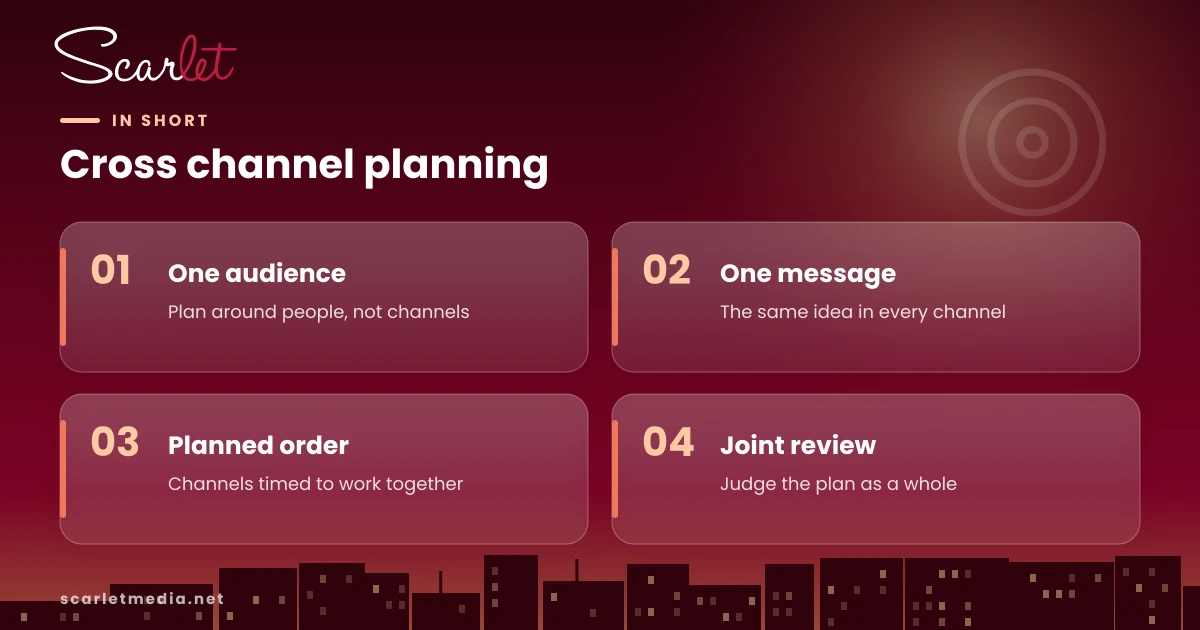
Cross channel media planning starts from the other end. You define one audience and one goal, then decide what each channel should do to move that audience forward. The channels are parts of one machine, not five machines in the same room.
In practice, cross channel media planning changes three things. The goal is shared. The budget is split by role, not by habit. And results are read together, so one channel’s quiet work is not mistaken for failure.
Why Cross Channel Advertising Beats Single-Channel Plans
People do not live in one channel. They watch TV at night, pass billboards in the morning, scroll on the metro and search at lunch. Cross channel advertising follows that real path instead of hoping one channel does all the work.
Research supports the idea. In a well-known IPA study, Les Binet and Peter Field reported that integration can double efficiency compared with campaigns that are not joined up. When people see the same idea in more than one place, each exposure makes the next one stronger.
The 6-Step Framework
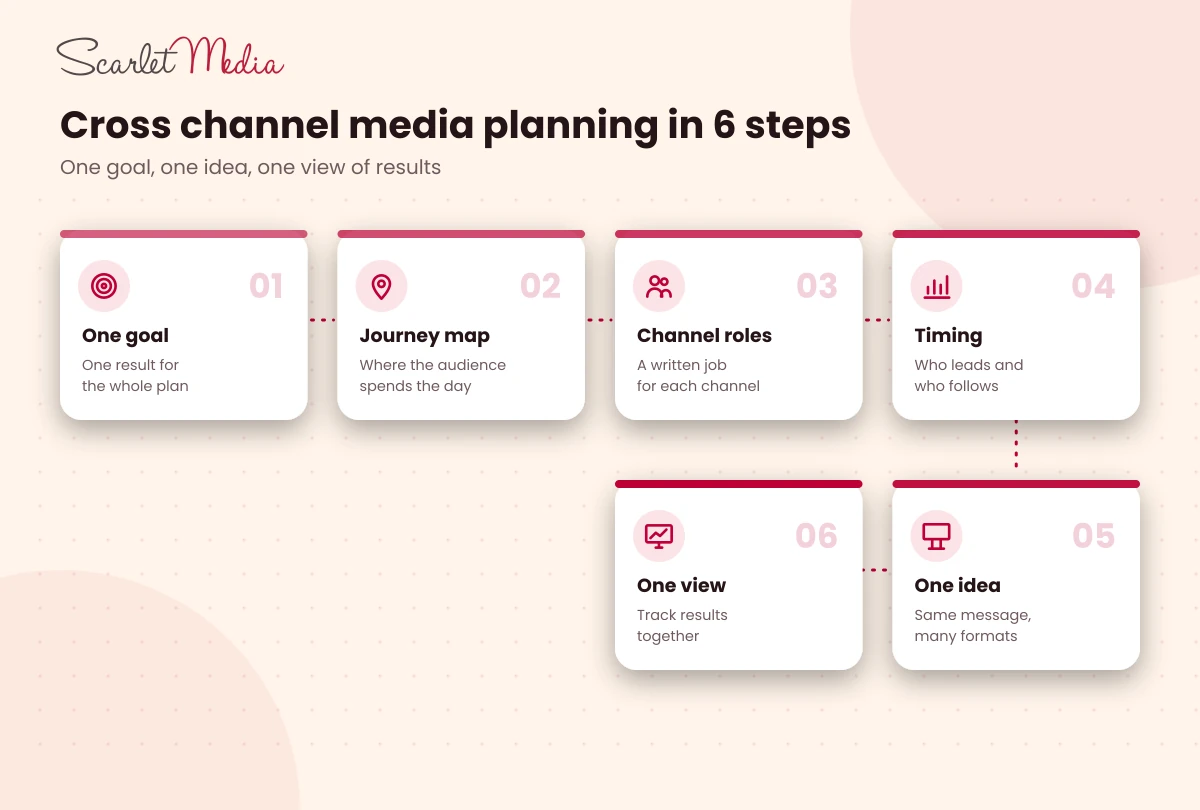
1. Set one goal for the whole plan
Pick the main result: awareness, leads, store visits or sales. Every channel will be judged against this single goal, not its own.
2. Map the audience journey
Where does your audience spend time from morning to night? Which screens, roads, stations and apps? This map shows where each channel can meet them.
3. Give each channel a role
TV may build reach. Outdoor may keep the brand visible near stores. Search may catch the people now looking. Write the role down for each channel.
4. Plan the timing together
Decide which channels lead, which follow and which run all the way through. A billboard that goes live a week before the search campaign gives search a warmer audience.
5. Build one creative idea
Use one core message and visual idea across every channel. Change the format, not the idea. This is what makes each exposure add up. A six-second billboard line and a thirty-second TV spot can tell the same story at two lengths.
6. Measure as one plan
Track results in one view, not five separate reports. Agree on the core numbers before launch, such as reach, site visits and sales, and check them weekly. This step is often skipped. Nielsen’s 2025 research found that only 32% of marketers measure digital and traditional spend together.
Where Cross Channel Media Buying Comes In
A strong plan still needs to be bought well. Cross channel media buying means booking each channel in a way that protects the plan: right dates, right placements and right rates.
This is where many plans break. The plan says outdoor should start in week one, but the best sites are already booked. The plan says TV should run in prime time, but the budget only covers late slots. Planning and buying need to talk early, ideally in the same team.
Multi Channel Media Buying vs a True Cross Channel Media Plan
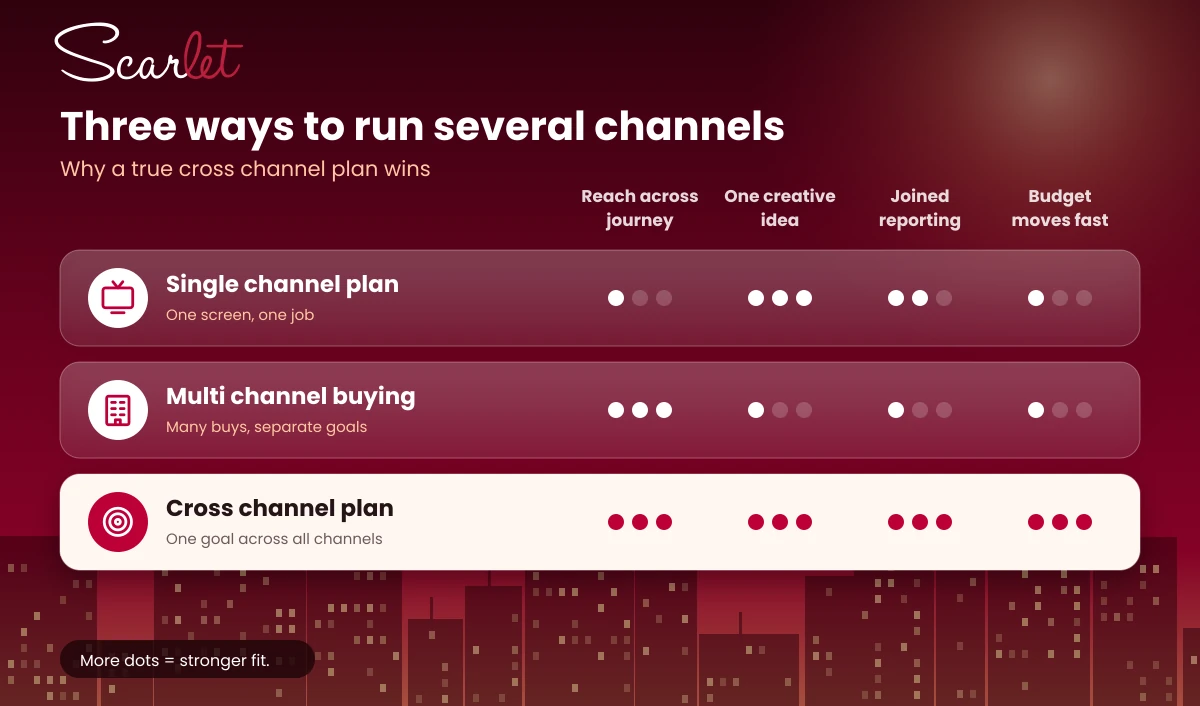
The two terms sound alike but work differently. Multi channel media buying means you buy space on several channels. A true cross channel media plan means those channels are tied together by one goal, one idea and one set of numbers.
You can buy on six channels and still not have a cross channel plan. Cross channel media planning is what turns those six buys into one campaign. The test is simple: if you removed one channel, would the others perform worse? If the answer is no, the channels are not working together yet.
Common Mistakes to Avoid
- Splitting budget evenly. Equal shares feel fair but rarely match the job each channel does.
- Changing the message by channel. Small changes are fine. A new idea on every screen breaks the chain.
- Judging each channel alone. A billboard may not drive clicks, yet it can raise search results for weeks.
- Planning too late. Outdoor and TV often need weeks of lead time. Start cross channel media planning early.
- Skipping the review. Set a date in the middle of the campaign to move money toward the channels that are pulling their weight.
How Scarlet Media Builds Cross Channel Plans
Scarlet Media plans and buys TV, OOH, DOOH and digital media for brands and agencies in Turkey, Dubai and beyond. Because we handle offline and online media together, we can plan the full journey and book it as one campaign. That makes cross channel media planning practical, not just a slide in a deck.
To talk to our team about your next campaign, email us at [email protected].
Leave a Comment