
Media Buying Solutions: 4 Smart Models Compared for Growing Brands
Rauf Kenan Media Buying Services 0
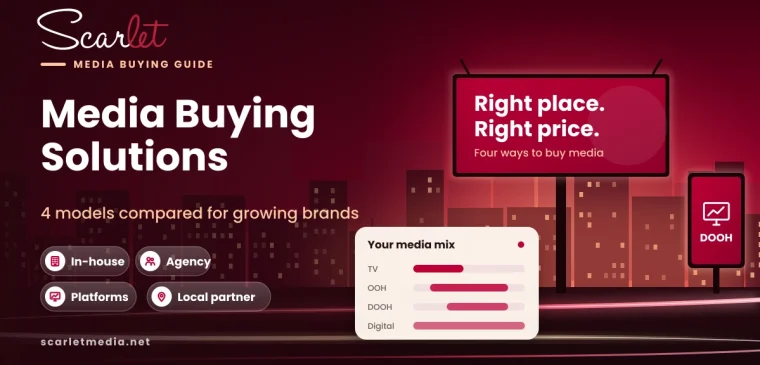
Choosing between media buying solutions is one of the first big calls a brand makes once its ad budget starts to grow. You can buy media yourself, hand it to an agency, run it through a platform, or mix all three. Each model trades control, speed and cost in a different way. This guide walks through the four main models and how to tell which one fits your brand right now.
What Media Buying Solutions Actually Cover
Media buying is the work of getting your ad in front of the right people at a fair price. It covers research on where your audience spends time, talks with media owners, booking the space, checking that the ads ran, and reporting on results. Good media buying solutions handle every one of these steps, not just the booking.
The space can be a TV spot, a billboard, an airport screen, a video ad or a social post. The more channels you use, the more a clear model matters.
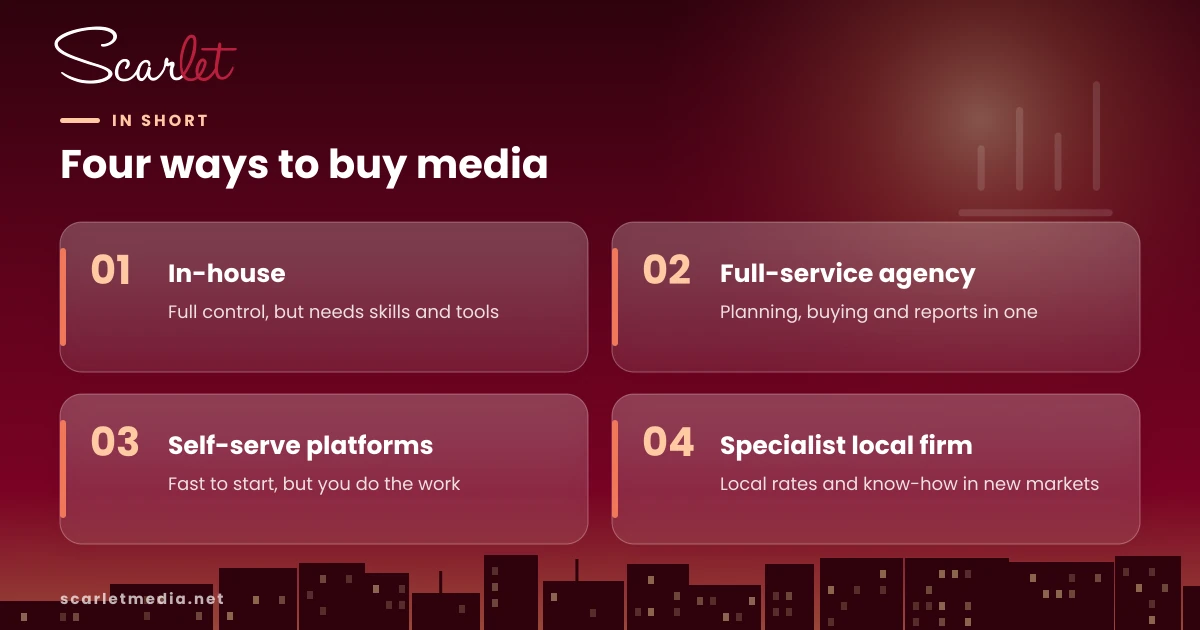
Model 1: Keeping Media Buying In-House
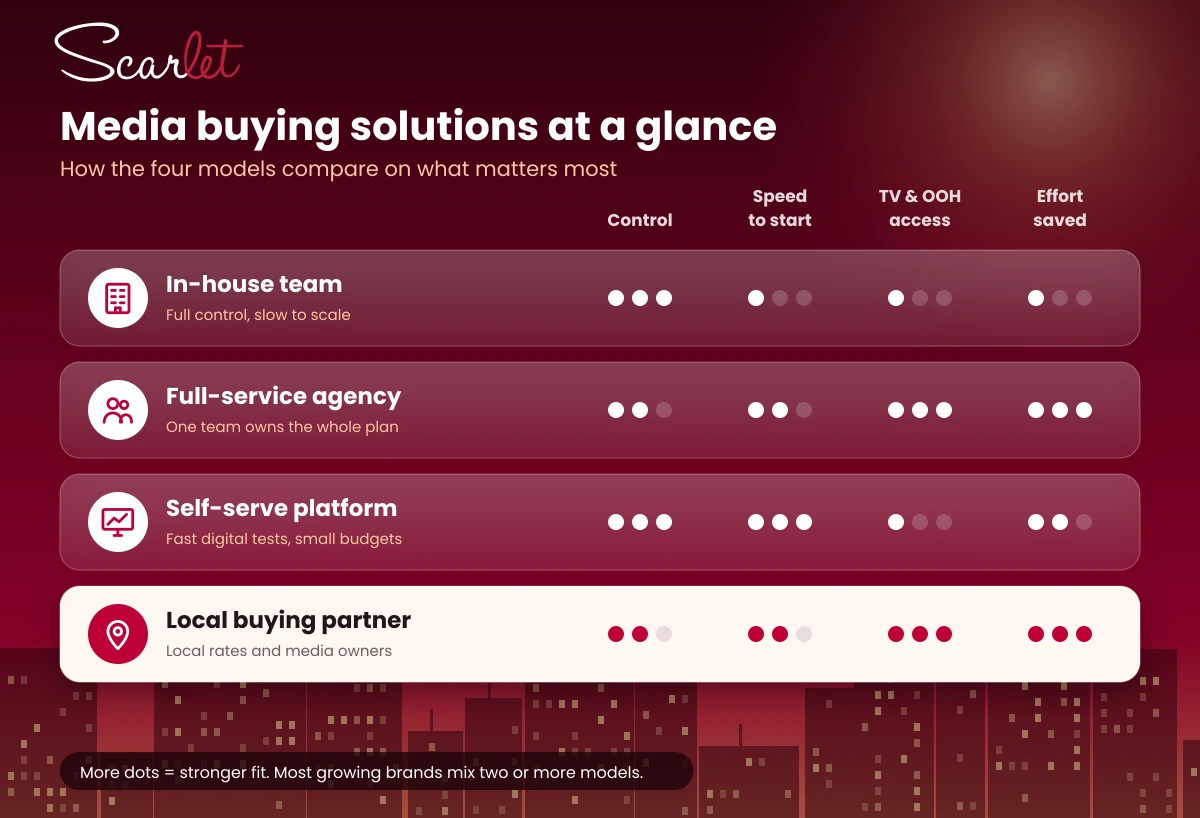
Some brands build their own team to plan and buy media. Of all media buying solutions, this one gives you the most control, and it keeps brand knowledge close. It is also a common choice: the ANA reports that 82% of its members had an in-house agency in 2023, up from 78% in 2018.
The catch is scale. An in-house team needs tools, data and rate deals that take years to build, plus people who know each channel well. For digital ads, that can work. For TV and outdoor in a new country, it is much harder, since rates and booking rules are set locally.
Best for: brands with steady budgets, one main market and mostly digital spend.
Model 2: Full Media Buying Services From an Agency
The classic model is to hand the whole job to an agency. Full media buying services usually include planning, rate talks, booking, checking and reports. The agency brings buying power, since it books space for many clients at once and can often get better terms.
You give up some day-to-day control, and fees vary by scope. Ask early how the agency is paid and what you will see in each report.
Best for: brands that run TV, outdoor and digital together, or that want one team to own the results.
Model 3: Self-Serve and Programmatic Platforms
Platforms let you buy ads yourself through a screen. Programmatic tools buy digital space by auction in real time, and self-serve tools walk you through campaigns on Google, Meta and other networks. Scarlet Media’s own Adroute is one example, built to help small teams launch ad campaigns without an agency.
These are the fastest media buying solutions to start with, and they cost little to test. They work best for digital channels, and they still need someone to set goals, write the brief and read the numbers. They rarely cover TV or large outdoor buys.
Best for: small budgets, quick tests and digital-first brands.
Model 4: A Specialist Media Buying Firm for Local Markets
When a brand or agency enters a new market, a local media buying firm can fill the gap. This firm knows the media owners, the price levels and the booking rules in that country. It can plan and book TV, billboards, airport media and screens for you, then report back in your language.
This model is common for global agencies that run work in Turkey or the Gulf without their own buying team there. The brand or lead agency keeps the strategy, and the local firm runs the buying.
Best for: cross-border campaigns, launches in Turkey or Dubai, and agencies without a local team.
How to Compare Media Buying Company Proposals
Once you know which model you want, you will often get more than one offer. A good media buying company should make its plan easy to check. Look for these points when you compare proposals for media buying solutions:
- Clear goals. The plan should say what success looks like, such as reach, site visits or sales.
- Audience fit. Each channel should match where your audience really is, not just where space is free.
- Rates you can compare. Ask for costs per format and per period, so you can weigh one offer against another.
- Proof of delivery. For outdoor, ask for photos or screen logs. For TV, ask for spot reports. For digital, ask for platform data.
- Simple reports. You should be able to read a weekly or monthly report in a few minutes.
If a proposal is vague on any of these, ask before you sign.
When a Media Buying Partner Makes the Most Sense
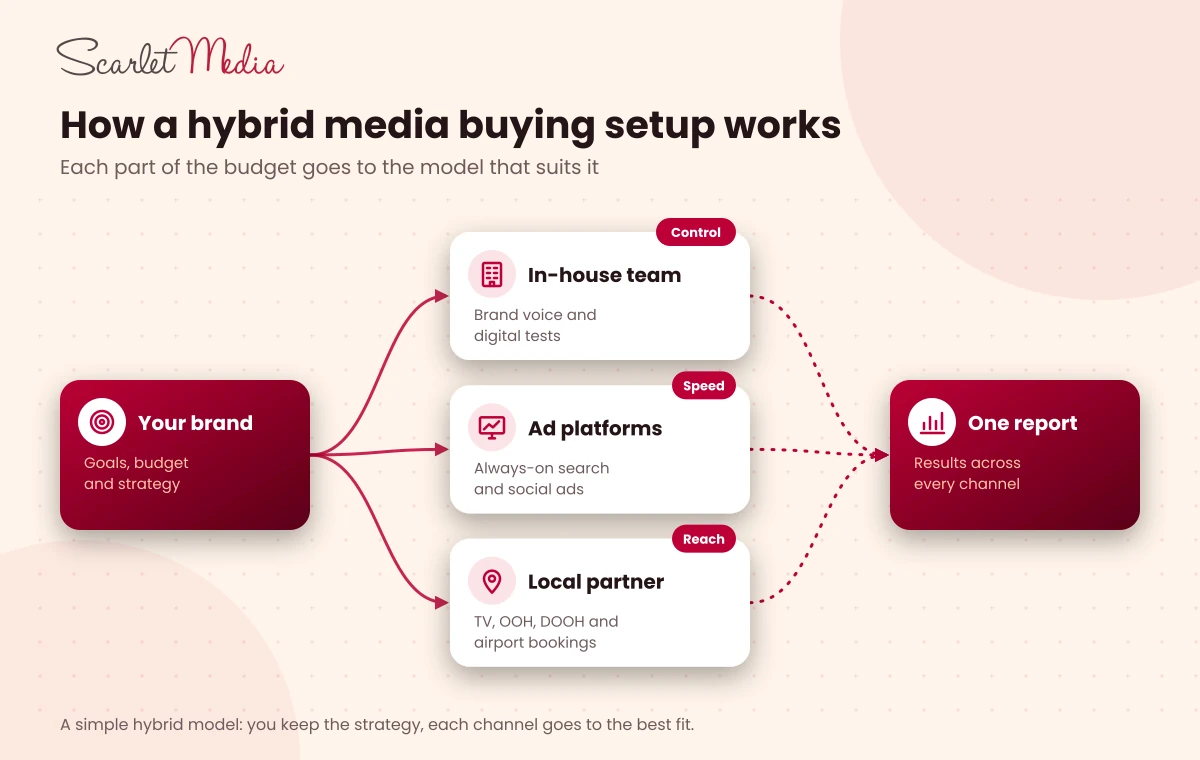
Many brands end up with a mix. They keep strategy and some digital buying in-house, use platforms for tests, and bring in a media buying partner for the channels that need local access. Mixing media buying solutions this way is often the most cost-effective path, because each part of the budget goes to the model that suits it best.
A partner makes the most sense when:
- you are entering a market where you have no media contacts,
- your plan includes TV, outdoor or airport media,
- you want one point of contact for several channels,
- or your team is strong on strategy but short on time.
How Scarlet Media Builds the Right Mix
Scarlet Media works with brands and agencies across Turkey, Dubai and beyond. We plan and buy OOH, DOOH, TV and digital media, and we often act as the local buying arm for agencies that run campaigns in Turkey. Our team starts with your goals and budget. Then we build a mix of media buying solutions that fits, from one billboard network to a full campaign across many screens.
To talk to our team about your next campaign, email us at [email protected].
Leave a Comment