

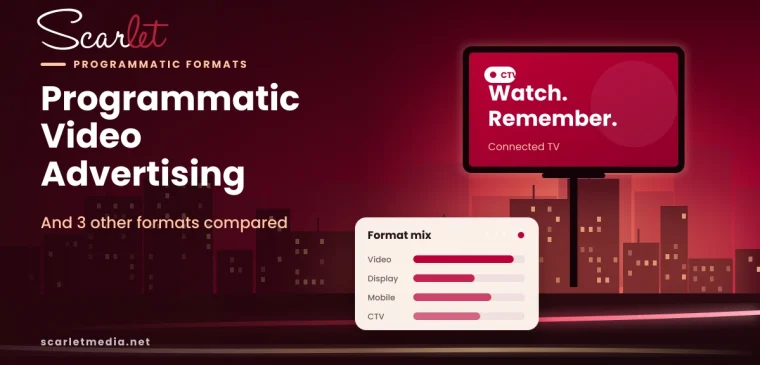
Programmatic Video Advertising and 3 Other Formats: Which Fits Your Goal?
Rauf Kenan Programmatic Formats 0
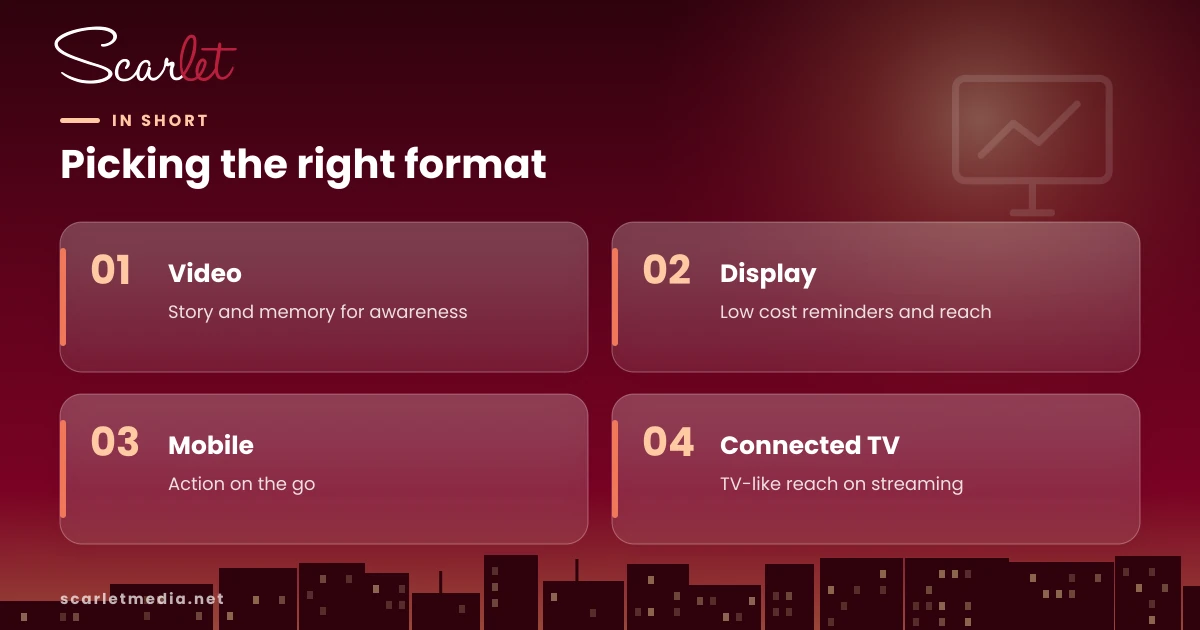
Programmatic video advertising has become the main event in automated ad buying, but it is not the only format worth using. Display, mobile and connected TV each do a different job. The best results come from matching each format to a clear goal and managing them as one plan. This guide compares the four main formats and shows how to choose.
Why Programmatic Video Advertising Leads the Way
Video tells a story fast. Sound, motion and people on screen build emotion in a way a static banner cannot. It is also where much of the money is going. EMARKETER reports that programmatic video spending in the US has passed non-video, and that close to 9 in 10 connected TV ad dollars are bought programmatically.
Programmatic video advertising can run before, during or between online videos, inside apps, on social platforms and on smart TVs. You can target by audience, context and time, and see results as the campaign runs.
Format 1: Programmatic Display Advertising
Programmatic display advertising covers banners and native ads on websites and apps. It is the oldest and most widely used programmatic format.
Best for:
- Reminding people who already know your brand.
- Driving visits and leads at a lower cost.
- Retargeting site visitors.
Watch out for: low viewability and banner blindness. Use clear creative and strict placement rules.
Format 2: Programmatic Mobile Advertising
Programmatic mobile advertising reaches people on their phones, inside apps and on mobile sites. Formats include banners, full-screen ads, rewarded video and native ads.
Best for:
- Reaching people on the move.
- App installs and in-app actions.
- Location-based offers, where privacy rules allow.
Watch out for: accidental clicks and app fraud. Use fraud filters and judge results by real actions, not taps.
Format 3: Connected TV
Connected TV, or CTV, means ads on streaming apps watched on smart TVs. It looks like classic TV advertising but is bought and targeted like digital.
Best for:
- Building reach and brand memory on the big screen.
- Reaching viewers who watch less linear TV.
- Adding audience targeting to TV-style campaigns.
Watch out for: higher costs per view. CTV works best when paired with clear reach goals.
How to Choose the Right Mix
Start with the goal, then match formats to it:
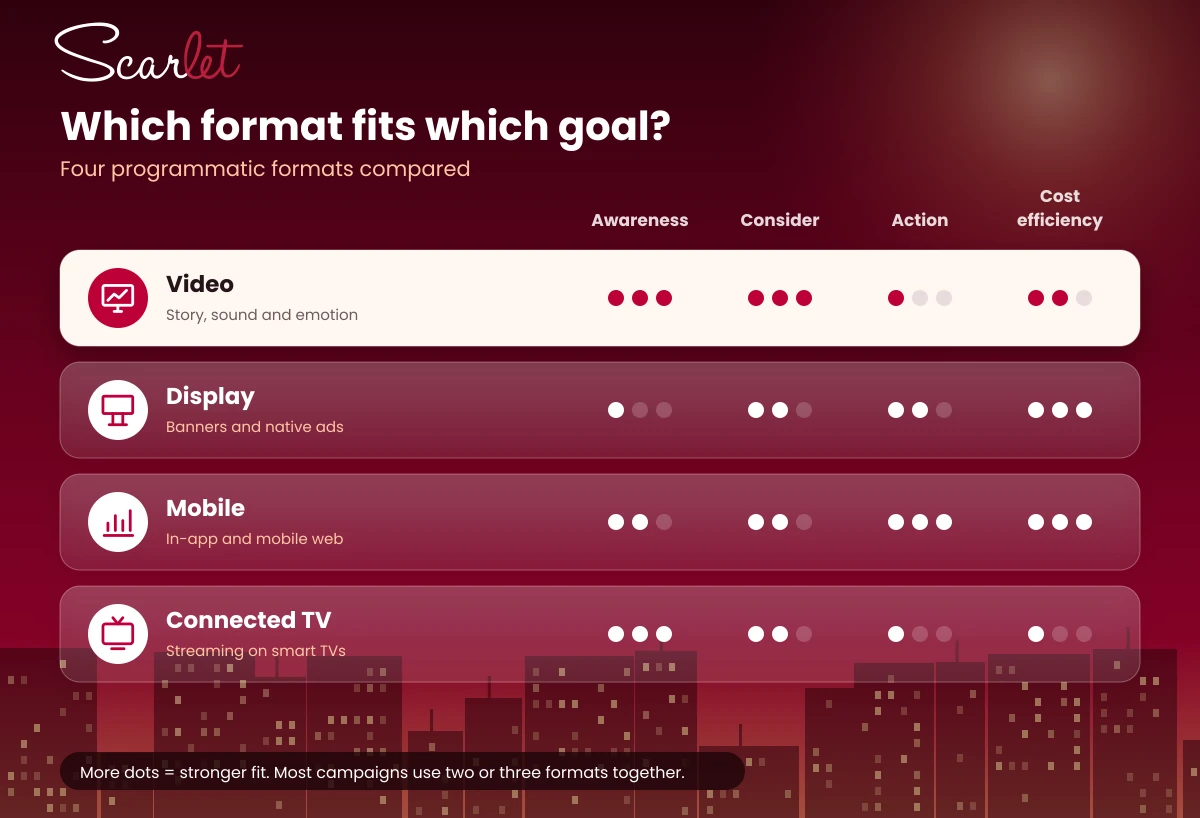
- Awareness: video and connected TV lead, with display for frequency.
- Consideration: video and display, with retargeting for people who engaged.
- Action: mobile and display, tied to clear conversion tracking.
Most campaigns use two or three formats together. A person can see a video ad at night, a banner the next day and a mobile ad when they are ready to act. Each format makes the next one feel familiar.
Programmatic Media Strategy: Planning Formats Together
A clear programmatic media strategy sets the role of each format before any money is spent. It answers:
- What is each format’s job in the plan?
- How much budget does each one get?
- How will frequency be capped across all formats?
- Which results will each format be judged on?
Without this, each format competes for credit, and budgets drift to whatever looks cheapest.
Programmatic Campaign Management: Keeping It on Track
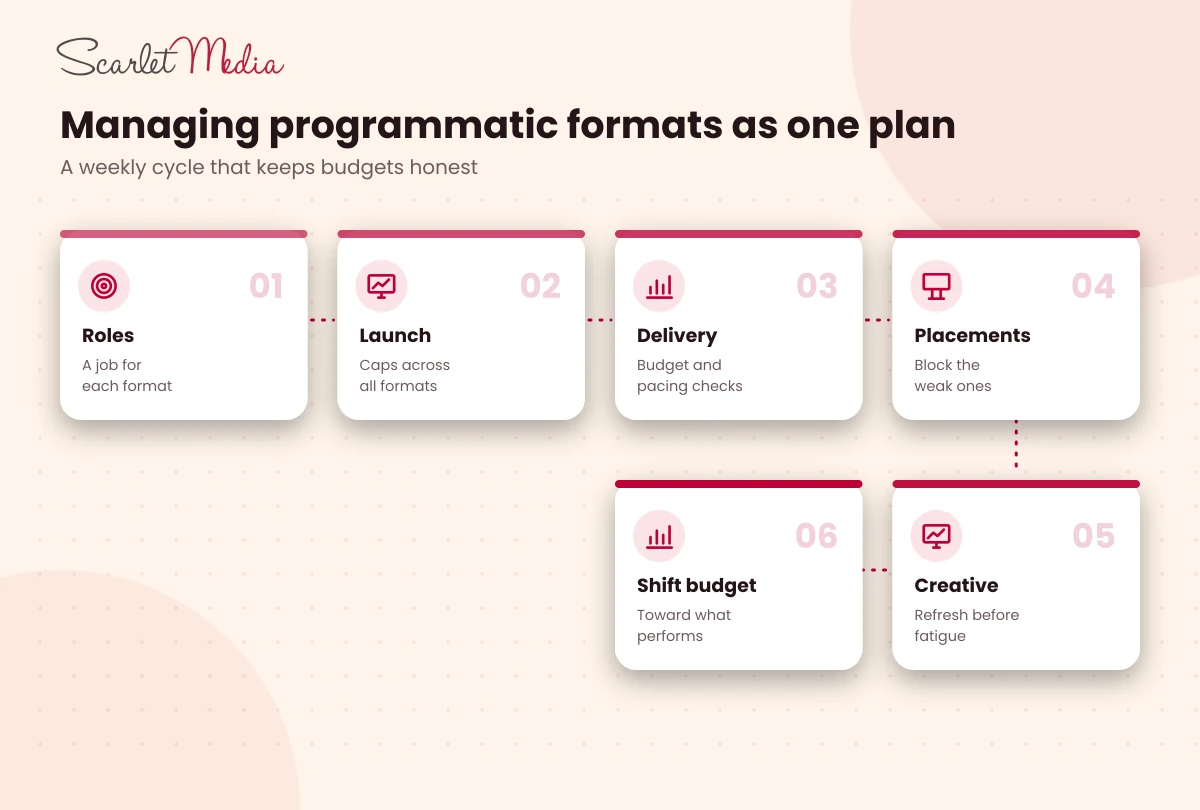
Good programmatic campaign management turns the plan into weekly action:
- Check delivery against budget and pacing.
- Review placements and block poor ones.
- Refresh creative before people tire of it.
- Shift budget toward formats and audiences that perform.
- Report results in one view, across all formats.
Video in particular needs creative care, and so does the landing page that follows a click. The first few seconds matter most, so put the brand and the key message up front.
Budget Tips Across Formats
There is no fixed split, but a few habits help:
- Give video enough budget to matter. A thin video budget spread across many sites rarely builds memory.
- Keep display and mobile flexible. These formats are easy to scale up or down based on results.
- Use connected TV for reach goals, not for cheap clicks.
- Hold back a test budget of around one tenth for new formats or audiences.
Review the split each month. As results come in, programmatic video advertising may earn more budget for awareness, while display and mobile take more for action.
Creative Tips for Programmatic Video Advertising
- Show the brand early.
- Design for sound off on mobile, with clear captions.
- Make short and long versions for different placements.
- Use vertical video where the format calls for it.
- Test two or three versions and keep the winner.
How Scarlet Media Plans Programmatic Formats
Scarlet Media plans and runs programmatic campaigns across video, display, mobile and connected TV for brands in Dubai, Turkey and beyond. Our team also produces video, so we can plan programmatic video advertising and the creative behind it as one job.
To talk to our team about your next campaign, email us at [email protected].
Leave a Comment