

Transit Advertising Agency: How Buses, Trains and Stations Fit Your Plan
Rauf Kenan Transit Advertising 0
A transit advertising agency helps brands reach people on the move. Every day, millions of commuters ride buses, trains, trams and ferries in big cities. They see the same routes, stations and screens again and again. That daily routine makes transit media one of the best ways to build frequency in a city.
Why Transit Media Works
Public transport carries a huge daily audience. In Istanbul, rail journeys reached about 4 million a day in 2025, up from 2.7 million in 2018. That count includes the metro, tram and Marmaray lines. Buses, metrobus lines and ferries add millions more. Dubai shows the same pattern: the RTA counted 802.1 million public transport riders in 2025.
Riders pass the same sites twice a day, five or more days a week. They also wait on platforms and sit in carriages, which gives them time to read. Few other media meet the same people so often.
Transit Advertising: The Main Formats
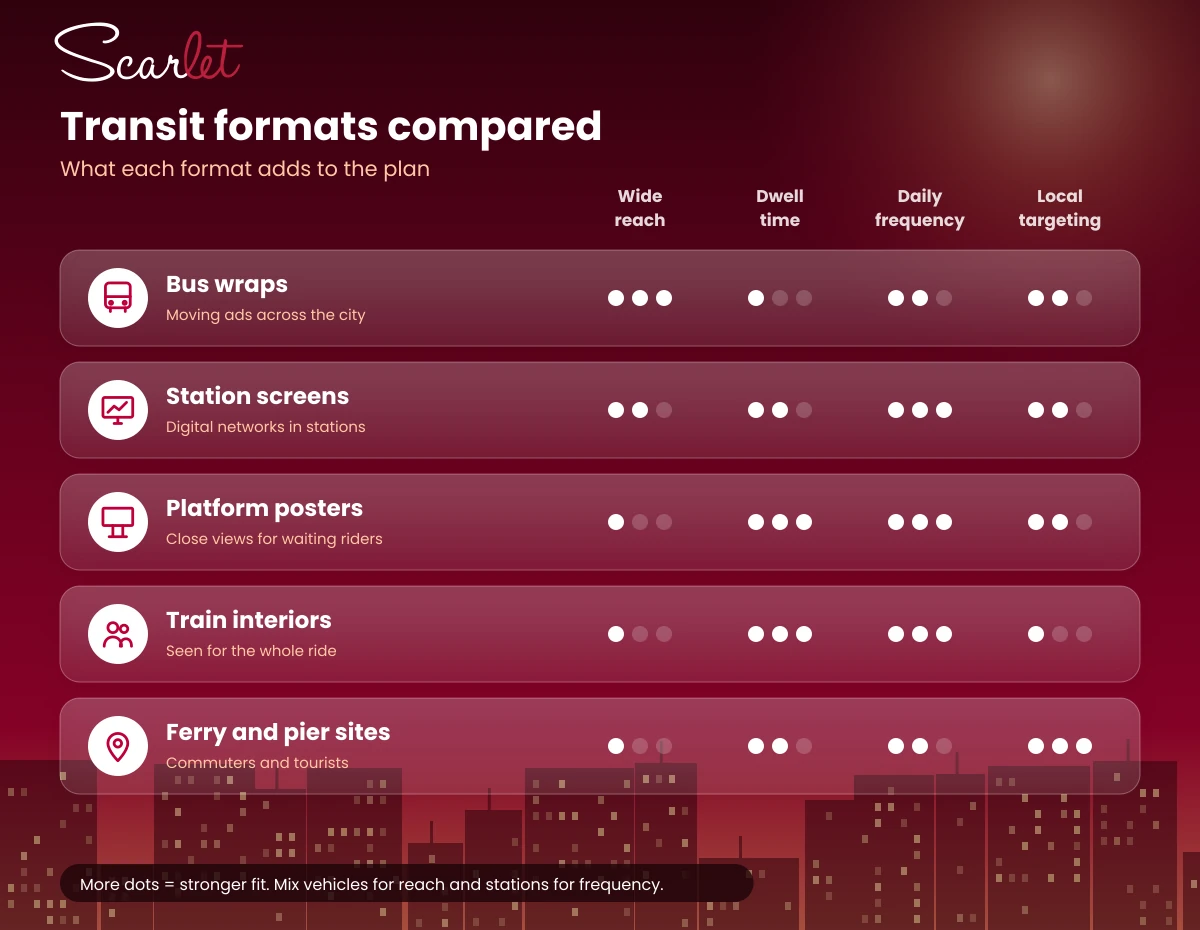
Transit advertising covers vehicles, stations and stops:
- Bus wraps and panels: moving ads that cover large parts of the city.
- Station screens: digital networks in metro and rail stations.
- Platform posters and lightboxes: close views for waiting riders.
- Train interiors: panels and screens seen for the whole ride.
- Ferry and pier sites: a strong fit in cities on the water, such as Istanbul.
- Bus stop shelters: eye-level panels for walkers and drivers.
Each format has a role. Bus wraps build wide reach. Station screens and train interiors build frequency among regular riders.
Bus, Rail or Ferry: Which One First?
Each mode reaches a different slice of the city. Buses reach people across many districts, including areas with no rail line. Rail lines reach large numbers of commuters on fixed routes, often with longer waits on platforms. Ferries and piers reach a mix of commuters and tourists, and they suit brands that want a strong local image in cities like Istanbul.
Start with the mode your audience uses most, then add others to fill gaps.
What a Transit Advertising Agency Does
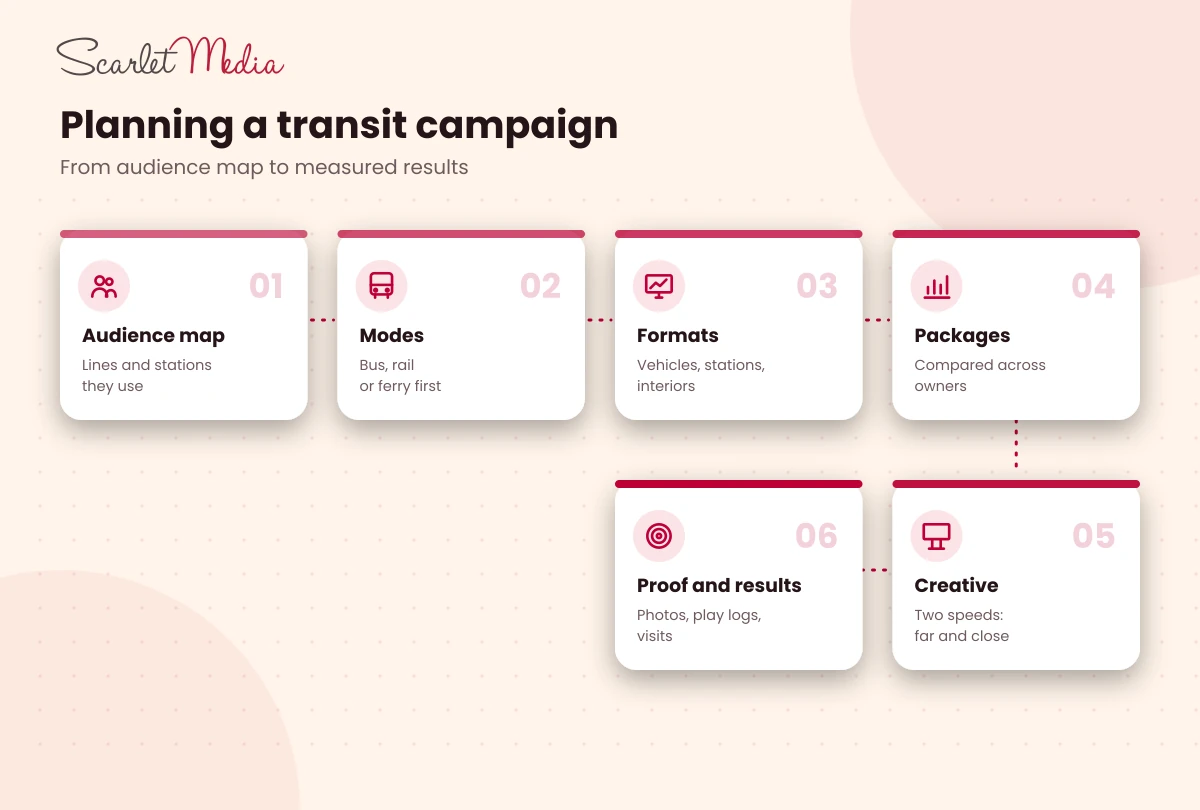
A transit advertising agency turns this mix into a plan:
- Maps your audience to the lines and stations they use.
- Chooses formats that fit your goal and budget.
- Books sites with the right operators and media owners.
- Checks creative for each format and size.
- Collects proof such as photos and play logs.
Transit Media Planning: Lines, Stations and Times
Transit media planning starts with people. Office workers fill business district stations in the morning. Students use lines near universities. Shoppers use stations near malls on weekends.
Pick the lines and stations your audience uses, then choose times. Digital screens let you show different messages in the morning and evening rush. A transit advertising agency uses ridership data and local knowledge to make these choices.
Transit Media Buying: Packages and Periods
Transit media buying works through operators and media owners. Space is often sold in packages, such as a set of stations, a number of buses or a share of a screen network. Prices depend on line, station, format and period.
Busy central stations cost more than outer ones, and popular periods sell out early. Ask what each package includes and whether production and installation are part of the price. Compare packages across owners before you commit.
Creative That Works on the Move
Transit creative has two speeds. Bus wraps and roadside panels need short, bold messages, since people see them from a distance. Platform posters and train interiors can carry more detail, since riders have time to read.
Keep the logo large on vehicles, since a moving bus is seen for only a moment. Use the location in the message where you can. “Two stops to our store” is stronger than a general offer. Test each design at both speeds before launch.
Measuring Transit Campaigns
Transit is easier to measure than many people think. Ridership data shows how many people pass each station. Digital screens provide play logs. Track brand searches, website visits and store traffic in the districts along your lines. Compare results before and during the campaign to see what transit adds.
Choosing a Transit Media Agency
A good transit media agency shows you how each site links to your goal. It should share ridership data, maps and a clear plan. After launch, it should send proof photos, play logs and a final report. Ask how it measures results, such as store visits or searches in target areas.
How Scarlet Media Works as Your Transit Advertising Agency
Scarlet Media plans and buys outdoor media in Turkey, including metro and transit sites in Istanbul and other cities. We map your audience to the right lines and stations, book across operators and send proof after launch. We also link transit media with digital to reach riders on their phones during the trip.
To talk to our team about your next campaign, email us at [email protected].
Leave a Comment